Reviewed · MUSCAT TOURS
Muscat: Omani Food Tour with Shuwa & Halwa
Muscat’s food story is best understood one plate at a time, and this tour gives you five chances to do exactly that. You’ll try shuwa, meat cooked underground after being wrapped in banana leaves and spices, then move through halwa, Zanzibar-influenced snacks, Omani bread, spiced tea, and grilled mishkak.
I like the way the tour connects food with daily life, especially when guides such as Hisham and Yousef explain family traditions and show short videos of how dishes are prepared. I also like the small group size, limited to six, plus hotel pickup, which makes this an easy first-night activity in Muscat.
The main caution is simple: come very hungry. The portions are generous, and the tour can feel like a full evening meal rather than a light tasting. People with food allergies should not book, and fresh juices cost extra.
Key points to know before you book
- Shuwa is the main event: Taste meat or chicken cooked underground for 8 to 24 hours after being wrapped with spices and banana leaves.
- Five food stops keep the evening moving: You’ll sample Omani dishes, Zanzibar-style snacks, bread, tea, and grilled mishkak rather than sit in one restaurant.
- The cultural explanation is part of the value: Guides including Hisham and Yousef talk about preparation, family celebrations, customs, and everyday Omani life.
- The group is capped at six: This makes it easier to ask questions and share food without the feel of a large coach tour.
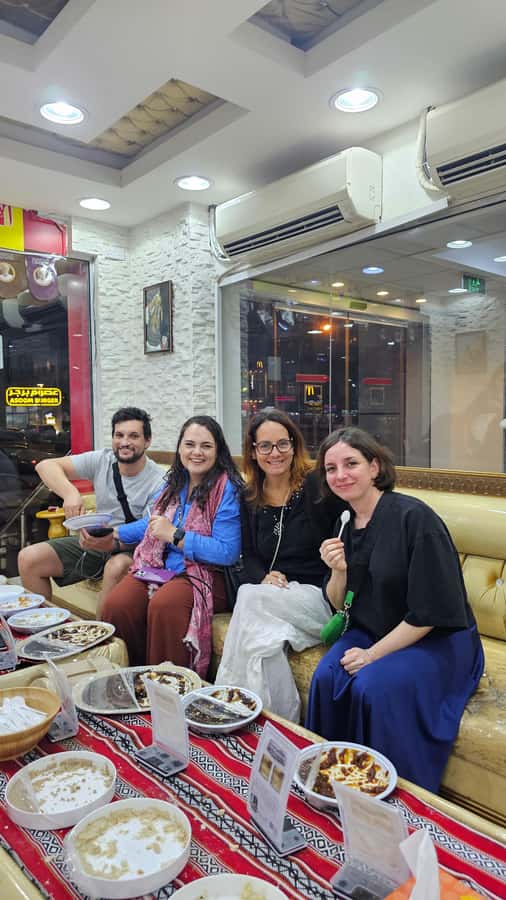
- It is a very filling experience: Shuwa with qabuli rice, halwa, samosas, mandazi, bread, tea, and mishkak add up quickly.
- Vegetarian substitutions are possible: Meat or chicken can be replaced with fish or salad, but people with food allergies should avoid the tour.
Why this is a smart first evening in Muscat
I’d put this tour near the start of your Oman trip, not the end. Food gives you an immediate way into the country, and the guide can explain dishes you may otherwise pass over on a menu.
The tour lasts 150 minutes and includes pickup and drop-off from your hotel. That matters in Muscat, where the city spreads across a wide area and many useful food stops are not places you would naturally find on a short walk from a hotel.
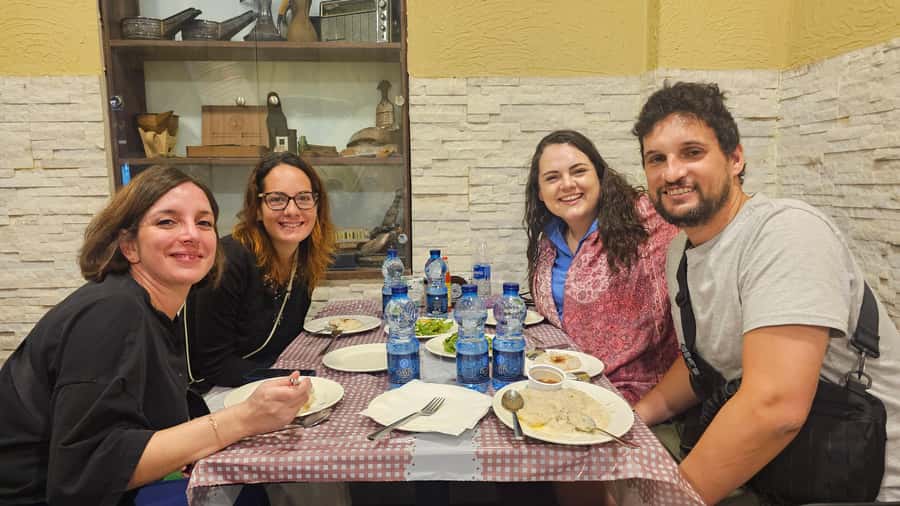
The small group limit of six is another plus. You can ask about ingredients, dining customs, Oman’s links with East Africa, or anything else that comes up. The guides have also helped solo visitors feel included, and the shared format gives you a chance to meet other people without committing to a large group outing.
The guides vary by departure. Hisham and Yousef, also listed as Yusuf in some feedback, receive especially strong praise for their friendly manner and clear explanations. Hanieh, Amin, and trainee guide Temur have also led departures. You should expect an English-speaking guide, but the exact person may not be fixed when you book.
more half-days around Muscat worth comparing
- Jabal Shams Food Tour
★ 5.0 · 5 reviews - Historical Salalah City Tour with Culture, Food & Shopping
★ 4.6 · 20 reviews
Shuwa and qabuli rice: the dish that explains Omani hospitality
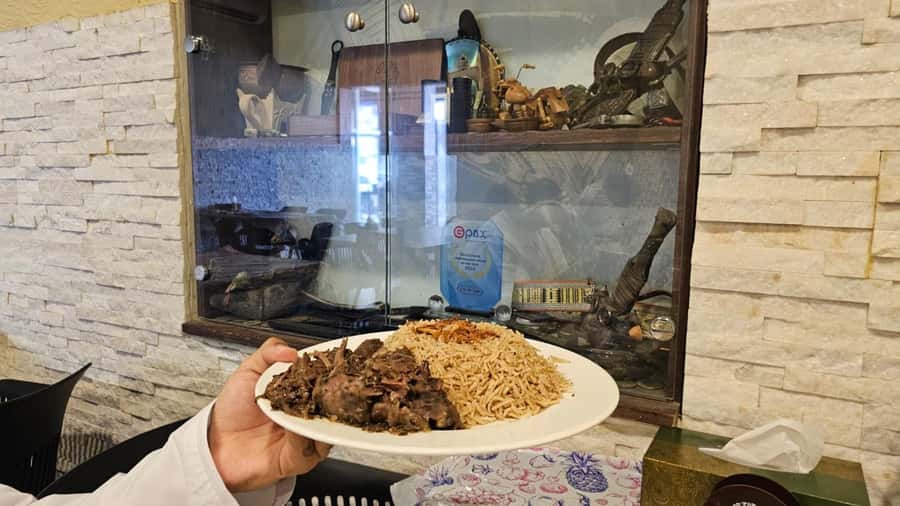
The meal begins with shuwa, the dish most closely tied to the tour’s title. Meat or chicken is wrapped in banana leaves with spices, then cooked underground for between 8 and 24 hours. The description also notes that the meat is fermented for more than 40 days before this cooking process, a detail that shows how much preparation goes into the dish.
You are not simply being handed a plate of slow-cooked meat. The guide explains how shuwa fits into Omani family celebrations and why it is treated as a special meal. Some guides also show short videos from their own family occasions, which gives the dish a personal connection beyond a standard restaurant explanation.
Shuwa is served with qabuli rice, cooked with meat spices. The rice makes the first course more substantial, so pace yourself. It is tempting to treat the opening dish as a sample, but this is closer to a proper main course.
If you do not eat meat or chicken, you can request fish or salad instead. Still, I would confirm your preference when booking or before pickup, since the standard menu is built around several meat-based courses.
Halwa and coffee: a sweet Omani ritual
After the savory opening, the tour turns to Omani halwa with coffee. Halwa here is not the same as every sesame or semolina sweet sold around the Middle East. The listed ingredients include nuts, honey, saffron, ghee, and cardamom, along with closely guarded additions.
The portion is sweet, fragrant, and filling. Saffron and cardamom give it a distinct character, while nuts add texture. Coffee with rose water brings a floral note and cuts through the sweetness.
This stop is useful because it shows how food and hospitality overlap in Oman. Coffee and sweets are not just an afterthought. They are part of welcoming people and sharing time together, and the guide can explain that role as you eat.
If you have already had a large meal before the tour, halwa may be the point where you realize the evening will be bigger than expected. I recommend treating lunch or an early dinner as a small meal on tour day.
Zanzibar snacks reveal Oman’s wider food connections
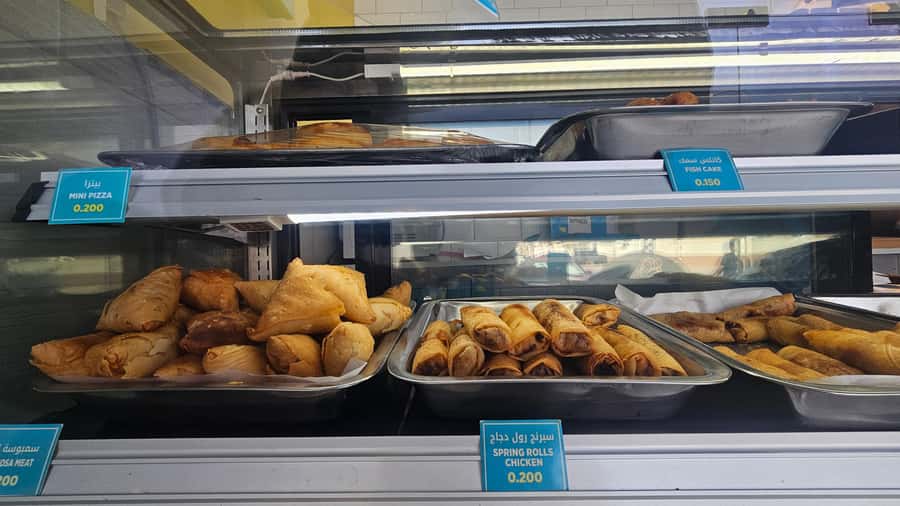
One of the most interesting parts of the route is the selection of light foods associated with East Africa, especially Zanzibar. Oman’s long connection with Zanzibar appears here through samosas, mandazi, kachori, and katlisi.
These are small items, but they add useful range to the evening. They show that Omani food is not a closed category limited to rice, meat, and sweets. Trade, migration, and family ties have shaped what people eat and serve.
I particularly like this part for anyone who has already sampled Middle Eastern food elsewhere. The snacks offer familiar forms with a different regional connection, and the guide can explain where they fit in Omani life.
The wording describes these as light meals, but the full sequence is not light. You may receive several pieces to share, and the generous approach means you should avoid filling up at the first two stops.
A completely different sort of day from Muscat:
- Muscat: Daymaniat Islands Snorkeling Trip with Brunch
★ 4.7 · 2,317 reviews - From Muscat: Wadi Shab & Bimmah Sinkhole Full-Day Tour
★ 4.8 · 1,862 reviews - Muscat: Wahiba Desert and Wadi Bani Khalid Guided Group Tour
★ 4.8 · 820 reviews - Muscat: Half-Day Sightseeing Essentials Tour and Audio Guide
★ 4.2 · 598 reviews
Omani bread lets you choose your own flavor
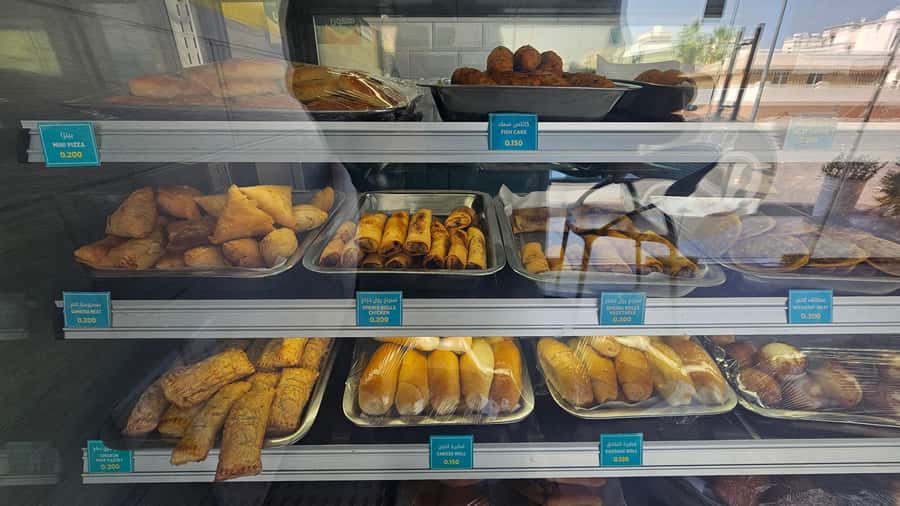
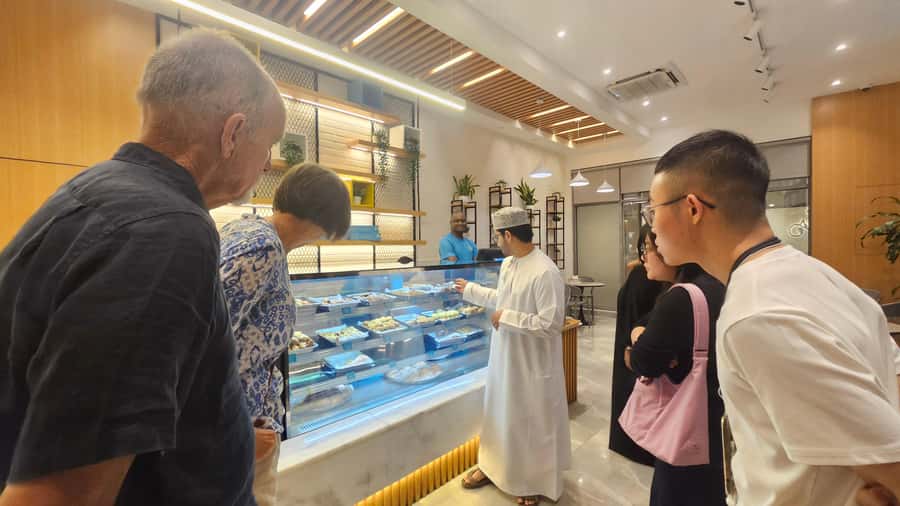
The next stop focuses on slices of Omani bread with a range of toppings and fillings. Options listed include cheese, honey, date juice, eggs, potatoes, and thyme.
This is a good break from the richer shuwa and halwa. You get to compare sweet and savory combinations, and the variety makes it easier for each person in a small group to find something appealing.
The bread also gives you a look at everyday eating rather than only celebration dishes. Cheese, eggs, potatoes, and thyme make this course feel more familiar and practical, while honey and date juice push it toward dessert territory.
Do not expect a formal bread-making lesson unless your guide chooses to explain it in more detail. The key value here is tasting several versions and hearing how Omani meals are commonly shared.
Ginger tea and karak bring the group together
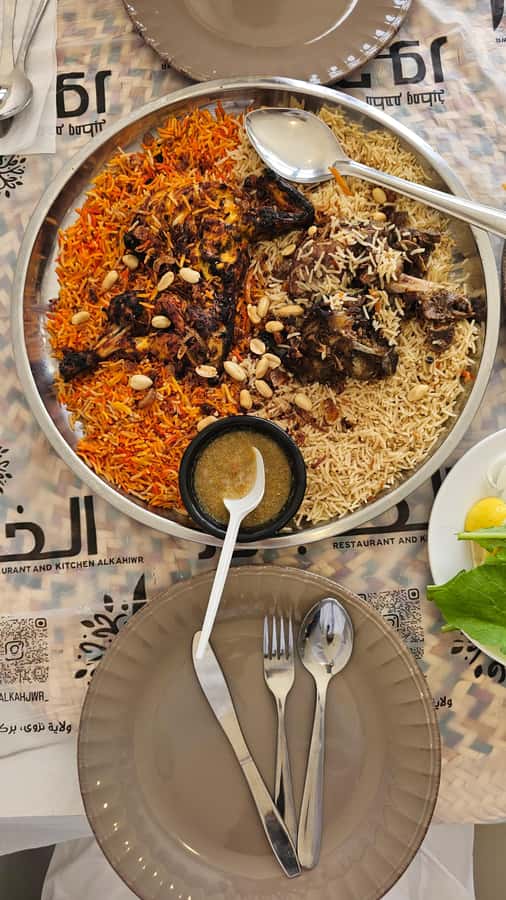
Tea appears in more than one form during the experience. You may sip tea mixed with ginger, saffron, cardamom, cinnamon, and milk, and several food stops include karak tea.
The spice mix gives the drink warmth and fragrance. Ginger and cardamom are easy to notice, while cinnamon and saffron add a softer background. Milk rounds it out into a comforting drink rather than a plain cup of tea.
One small local touch is ordering and drinking karak in the car. That may sound ordinary, but it is exactly the kind of daily habit that helps the tour move beyond a checklist of famous foods.
Coffee with rose water appears with the halwa, while fresh juices are not included. If you want juice, budget separately. The included drinks are the better choice if you want to stay close to the traditional menu.
Mishkak finishes the meal with smoke and spice
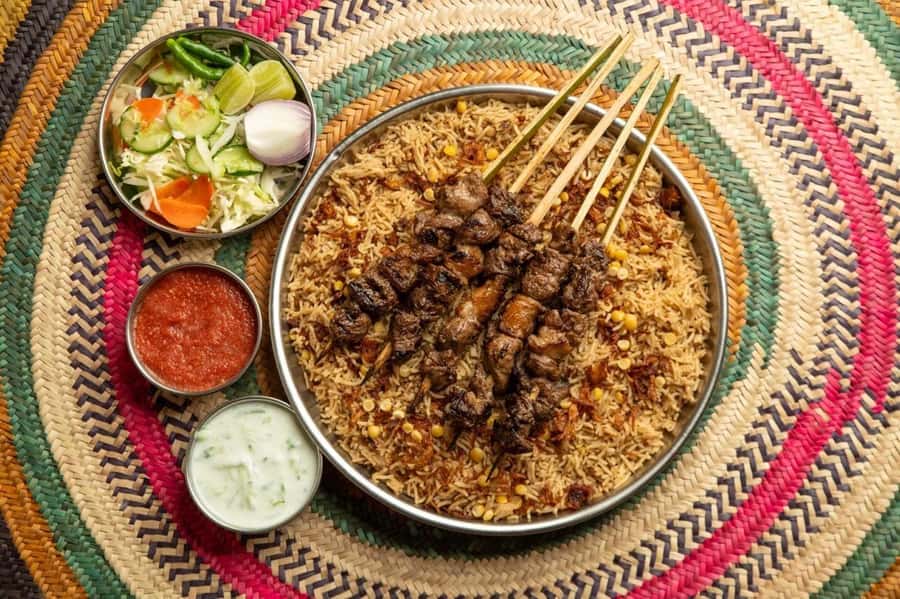
The final food is mishkak, grilled pieces of meat, chicken, or squid served with a tamarind-like sauce and Omani spices. This course brings a more direct grilled flavor after the slow-cooked shuwa and sweet halwa.
You may choose among meat, chicken, or squid in the standard selection, while fish or salad can replace meat or chicken for a vegetarian request. If seafood is important to you, ask what is available on your departure rather than assuming squid will be served.
Mishkak is a fitting finish because it feels like street-level food. It is easy to eat, strongly seasoned, and different enough from shuwa to keep the final stop interesting.
By this point, you will likely be full. I like that the tour ends with a savory dish rather than another dessert, but you should be willing to stop eating when you have had enough. The group may be happy to chat and sample slowly, and some departures run longer than 150 minutes when people take their time.
Five stops are more useful than one big restaurant meal
The route’s biggest strength is variety. You are not asked to judge Omani cuisine from one plate in one dining room. Instead, you see how different dishes fit together across several local food settings.
That format also makes the tour practical for first-time visitors. You can note which foods you want to seek out later, learn the names of dishes, and ask how to order them. Several guides also offer broader tips for the rest of an Oman trip.
The tradeoff is that the exact locations are not listed in advance. If you want a precise restaurant itinerary or a tour centered on one famous market, this may feel less predictable. The point is the sequence of foods and explanations, not a fixed set of landmark addresses.
Some departures include a short detour to see a mosque or a view over Muscat. Treat that as a possible extra, not a guaranteed sightseeing stop, since the central promise is the food tour.
What the $77 price really covers
At $77 per person, this is not a cheap meal. It is also more than a simple restaurant dinner, because the price includes hotel pickup and drop-off, a live English-speaking guide, five food experiences, and a meal large enough to replace dinner for many people.
The transport adds real value in Muscat. You do not need to arrange taxis between several stops, and the guides can use the drive to discuss Omani culture. The car has been described as clean and comfortable, though the exact vehicle can vary.
I see the best value here for solo visitors, couples, and first-time Oman visitors who want an organized introduction. If you already know Muscat well and mainly want the lowest-cost way to eat shuwa, ordering one meal independently will cost less.
The tour also works well if you do not consider yourself a serious food person. The explanations cover history, culture, and daily customs, so you are not expected to care only about taste. If you are a dedicated food fan, the five-stop format gives you a broad first look at the local menu.
Practical advice for a smoother evening
Plan to arrive hungry. You will be offered shuwa and rice, sweets, several snacks, bread, tea, and mishkak, and the food is described as generous rather than carefully rationed.
Tell the operator about fish, salad, or other dietary needs ahead of time. Meat and chicken substitutions are available, but the experience is specifically marked as unsuitable for people with food allergies.
Wear comfortable clothes and keep your evening flexible. The stated duration is 150 minutes, but slow eating, conversation, or a brief detour can extend the outing.
Hotel pickup is included, and you should wait in the hotel lobby. If your accommodation is outside the pickup area or is not listed, choose the Royal Opera House as the meeting point and make your own way there.
The tour is wheelchair accessible. Pets, smoking, and alcoholic drinks in the vehicle are not allowed.
Who should book this Muscat food tour?
Book it if you want a friendly introduction to Omani food without spending your first day guessing at menus. It is especially useful for solo visitors, couples, and small groups who value conversation as much as eating.
I would also recommend it to anyone curious about Oman’s links with Zanzibar and East Africa. The samosas, mandazi, kachori, and katlisi give the evening a wider frame than a standard Gulf cuisine tasting.
You may want to skip it if you prefer a short, tightly timed tasting or if a large amount of food would be uncomfortable. It is also the wrong choice for people with food allergies, and fresh juice is not part of the included package.
Should you book it?
Yes, if you want an easy and filling first look at Muscat through food. The strongest reasons are the five-stop format, the small group, the included transport, and guides such as Hisham and Yousef who explain how dishes connect to family life and Omani customs.
Book early in your stay so you can use the food knowledge later. Arrive with an appetite, request any fish or salad substitution in advance, and leave room for shuwa, halwa, karak, and mishkak. At $77, the value is in the meal, the transport, and the local context together.
FAQ
How long does the Omani food tour last?
The tour lasts 150 minutes, although the timing can run longer if the group eats and chats slowly.
What food is included?
The included food includes Omani shuwa, Omani halwa with coffee, East African light meals, Omani bread with different flavors, spiced tea, and mishkak.
What is shuwa?
Shuwa is meat or chicken wrapped in banana leaves and spices, then cooked underground for 8 to 24 hours. The description also states that it is fermented for more than 40 days before cooking.
Is hotel pickup and drop-off included?
Yes. Hotel pickup and drop-off are included. You should wait in your hotel lobby.
What if my hotel is outside the pickup area?
If your hotel is outside the pickup area or is not listed, choose the Royal Opera House as the meeting point and arrive there independently.
Can I request a vegetarian option?
Yes. Meat or chicken can be replaced with fish or salad. You should communicate this request in advance.
Is the tour suitable for people with food allergies?
No. The experience is listed as unsuitable for people with food allergies.
Are fresh juices included?
No. Fresh juices are not included, while coffee and tea are part of the tour.
Newest Muscat trips on the site
- From Muscat: Nizwa & Al Hamra with Jebel Shams Night Stay★ 4.8 · 3 reviews
- Oman 3-Days 2-Night Shared Roundtrip Tour – Explore Oman’s Best★ 5.0 · 3 reviews
- Muscat trasfer: airport trasfer to/from hotel in muscat★ 5.0 · 3 reviews
- Watching Dolphins, Muscat★ 4.5 · 3 reviews
- Guided Private Tour to Wakan Village in Oman★ 5.0 · 3 reviews
- Muscat by Night Sightseeing Tour★ 4.8 · 3 reviews
- Wadi Shab full day tour (Muscat tours):Oman Shore excursions★ 4.5 · 3 reviews
- Muscat: Full-Day City and Wadi Shab Tour★ 4.3 · 3 reviews
Muscat Tours, compared.

Daymaniat Islands Snorkeling Trip with Brunch
Read our review →

Wahiba Desert and Wadi Bani Khalid Guided Group Tour
Read our review →
Half-Day Sightseeing Essentials Tour and Audio Guide
Read our review →

Daymaniat Islands Snorkeling Tour with Refreshments
Read our review →