Reviewed · MUSCAT TOURS
Big Bus Muscat Hop-On Hop-Off Tour
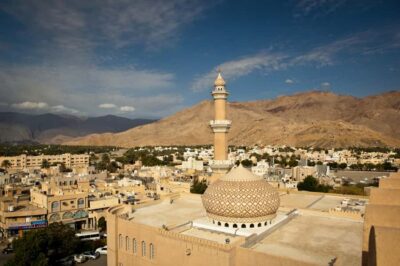
Muscat’s best sightseeing route links the Muttrah Corniche, old forts, palace district, and modern city in one wide loop. From the top deck, you get the shape of the city quickly: mountains behind you, the Gulf of Oman ahead, and white buildings spread between them. I like the easy views and the freedom to make your own route.
I also like that the bus reaches places that are awkward to connect on foot, including Al Alam Palace, Mirani Fort, the Royal Opera House area, and Qurum Beach. Cruise passengers may find the service especially useful, since the bus can meet ships near the pier. The main drawback is serious: buses may arrive only about every two hours, and some operating days have offered only a panoramic ride with brief photo stops.
Key points to know before you book
- Muttrah Souq is the natural starting point: Redeem your ticket here, then browse the market before or after your ride.
- The route covers Muscat’s main sights: You pass the Corniche, forts, palace district, CBD, churches and temples, marina views, and beaches.
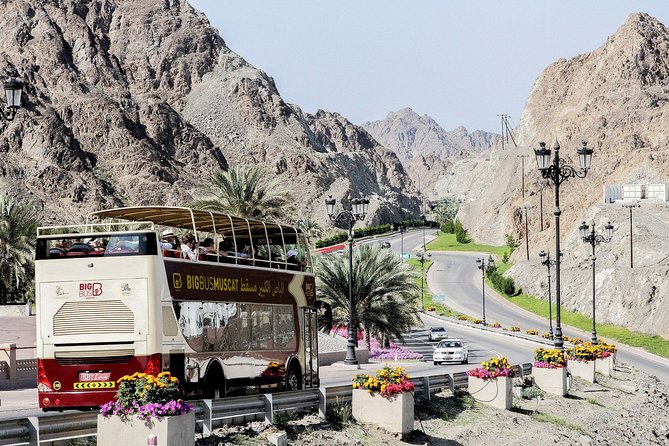
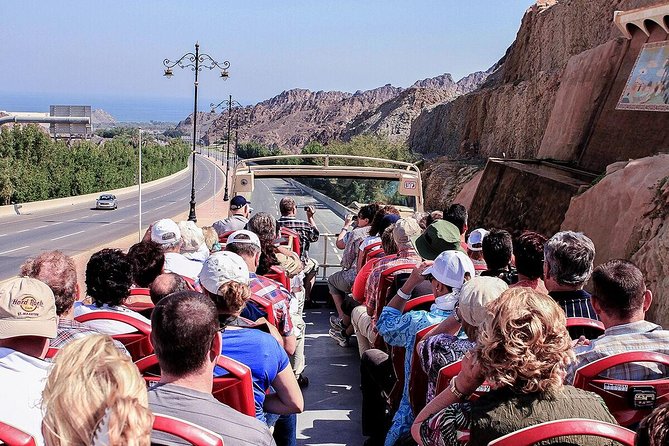
- The top deck gives you the best orientation: Open-air seating helps you see Muscat’s mountains, coast, and carefully controlled low-rise architecture.
- Long gaps affect the hop-on concept: Plan your stops carefully because a two-hour wait can consume much of a one-day ticket.
- Cruise passengers get a useful transfer option: The bus may meet ships at the port, even though this detail is not always obvious when planning.
- The price is high for a short loop: At $85 per person, the tour makes the most sense when you use it for transport as well as sightseeing.
Getting your bearings from Muttrah Souq
The tour begins at Muttrah Souq, one of Muscat’s most atmospheric areas. This is a useful departure point because the market and Corniche already give you a strong first taste of the city. You can look through small shops, stop for coffee, and walk along the waterfront before catching the bus.
Muttrah is not simply a place to buy souvenirs. Its narrow lanes, covered passages, and traditional shops offer a glimpse of how commerce has long worked in the city. The bus cannot replace time on foot here, so I would allow extra time for the souq rather than treating it as just a boarding point.
The open-top bus is most useful at the beginning of your visit. Muscat is spread out, with separate districts divided by roads, mountains, and coastal curves. A full circuit helps you understand the distances before you decide where to spend your limited time.
The listed ride takes about 1 hour and 45 minutes for a panoramic circuit. In practice, the bus has also operated as a 24-hour or 48-hour hop-on hop-off service. Those are two different ways to use the ticket, so check the day’s operating pattern before you settle into a detailed plan.
Other trips out of Muscat that fill the same day:
- Muscat: Daymaniat Islands Snorkeling Trip with Brunch
★ 4.7 · 2,317 reviews - From Muscat: Wadi Shab & Bimmah Sinkhole Full-Day Tour
★ 4.8 · 1,862 reviews - Muscat: Wahiba Desert and Wadi Bani Khalid Guided Group Tour
★ 4.8 · 820 reviews
Stop 1: Muttrah Souq and the Corniche
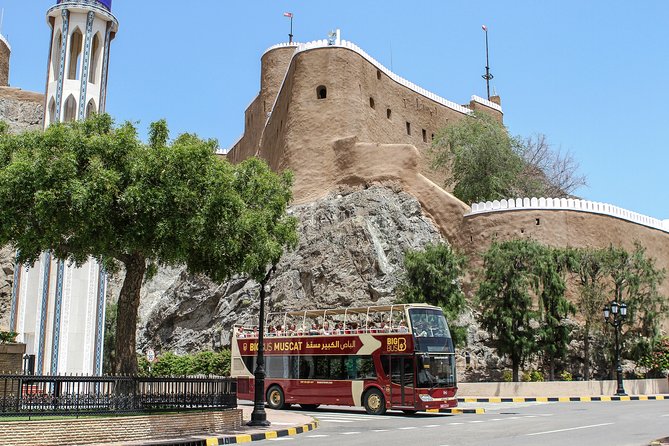
Muttrah Souq is the most immediately rewarding stop. It puts you near the Corniche, where the road follows the harbor and the old waterfront. From the bus, you see the contrast between the bright buildings, rocky slopes, fishing activity, and water.
Get off here if you want shopping, food, or an easy walk. The souq is also the practical ticket redemption point, so most people begin here even if they plan to stay on the bus for the whole circuit.
The main caution is timing. If the next bus is close to two hours away, a quick look around will not be enough to fill the gap for everyone. I would either commit to a proper visit to the souq and Corniche or remain on board for the first loop, using it to choose your stops.
Stop 2: Al Farahidi Street, churches, and temples
Al Farahidi Street is listed as the churches and temples stop. This part of the route adds a different side of Muscat, showing the city beyond its royal buildings, markets, and forts.
The stop is worth considering if you want to see religious buildings and a less obvious part of the city. Access can vary, and not every building or site may be open to visitors at the time of your ride. Treat this as a stop for the surrounding area rather than promising yourself a full interior visit.
The bus route labels are not perfectly consistent in the supplied information, so I would confirm with the onboard staff exactly what is accessible that day. Staff members have been praised for helping passengers understand the stops, and guides including Aimee and Jhay have been singled out for friendly assistance.
Stop 3: Central Business District
The Central Business District gives you a look at Muscat’s working city. It is less scenic than the palace or harbor sections, but it helps explain how the capital functions beyond its historic quarters.
This is a useful stop for anyone interested in modern Oman, offices, shops, and daily city life. It may not be the place where you spend hours, but it adds balance to the circuit. Muscat is not an open-air museum. The CBD shows you the present-day capital between the better-known sights.
If you are using the bus mainly for photographs, stay alert as the coach moves through this section. The upper deck provides broad views, but some scenes pass quickly. The audio commentary is useful here because it gives context while you ride instead of requiring you to stop and read signs.
A completely different sort of day from Muscat:
- Muscat: Half-Day Sightseeing Essentials Tour and Audio Guide
★ 4.2 · 598 reviews - Muscat: Wadi Bani Khalid Oasis & Oman Desert Tour
★ 4.8 · 434 reviews - Muscat: Daymaniat Islands Snorkeling Tour with Refreshments
★ 4.7 · 426 reviews - From Muscat: Nizwa and Oman’s Historical Gems Tour
★ 4.7 · 403 reviews
Stop 4: Al Bustan Street and Parliament

Al Bustan Street leads toward the Parliament area and the coast. This portion of the ride is valuable for the setting: Muscat’s built-up areas sit between rugged mountains and the sea, and the road itself becomes part of the sightseeing.
Some passengers have been unable to reboard at Parliament during certain operating conditions. That makes this a stop where I would ask before getting off. If the staff cannot confirm the next pickup, you may be better off staying on the bus and enjoying the views from the upper deck.
The Parliament area is also a reminder that the tour is a city overview, not a guided visit to every landmark. You see important districts and exteriors, but admission to buildings, meals, and drinks are not included.
Stop 5: Al Saidiya Street and marina views
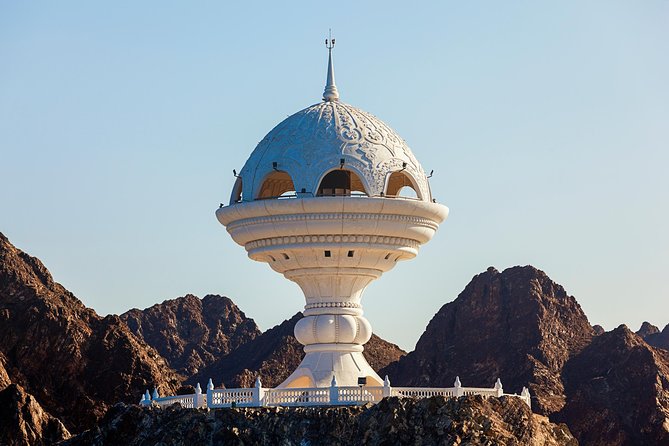
Al Saidiya Street is the marina views stop. It offers another look at Muscat’s coastal side and gives the route some variety after the CBD and government district.
This is a good place to stay on board if you are taking the full loop. The changing views are one of the strongest reasons to choose an open-top bus in Muscat. You can see the relationship between the water, harbor roads, white architecture, and bare mountain slopes without arranging separate taxis.
Getting off makes more sense if you have a clear reason to explore nearby. With long gaps between buses, an unplanned stop can turn into a large block of your day. The route is better for a few deliberate stops than for constant hopping.
Stop 6: Al Alam Palace and Muscat’s old quarter
Al Alam Palace is one of the major visual highlights. The palace district has a formal feel, with carefully maintained buildings and the dramatic forts rising behind the waterfront area.
The palace itself is admired from outside. The tour does not include a palace visit, but the bus gives you a convenient way to reach the district. Nearby, you can see the old quarter and connect the palace area with Muscat’s historic identity.
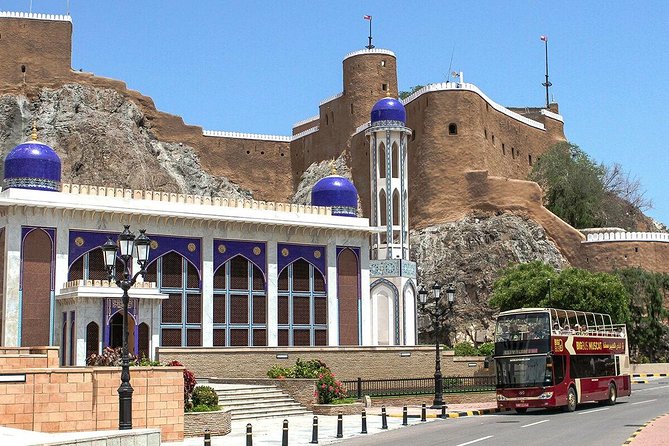
This is also the stop to consider for museums and forts. Al Jalali and Mirani forts sit above the harbor and are among the city’s most recognizable landmarks. They give Muscat its distinctive fortified profile, even when you are viewing them from the road rather than entering them.
Allow time for photographs, but confirm how long you can wait for the next bus. The old quarter can feel elusive from the route because several sights are separated from the main road. You may need to walk from the stop, and the bus schedule may not leave much room for a leisurely visit.
Stop 7: Bab Al Muthaib Street, Mirani Fort, and the harbor
Bab Al Muthaib Street is listed as the Mirani Fort and harbor stop. This is one of the most scenic parts of the circuit, with historic defenses, water, and the old city gathered together.
From the upper deck, you get a strong overall view of the harbor district. The route also passes Al Jalali Fort, Al Alam Palace, and the old quarter, so even if you do not get off, keep your camera ready.
This stop works well for a focused visit to the old city, but it is not ideal for a rushed hop-off. The forts are part of the view and local setting, while access inside may not be part of the bus ticket. The real value here is the combination of setting and orientation.
The bus then returns to Muttrah Souq. That makes the souq a convenient place to finish, shop, eat, or continue walking along the waterfront.
The Royal Opera House, Qurum, and the wider loop

The tour also takes in the Royal Opera House area, Al Shatti, and Qurum. These locations help show the difference between old Muscat and the city’s newer cultural and beach districts.
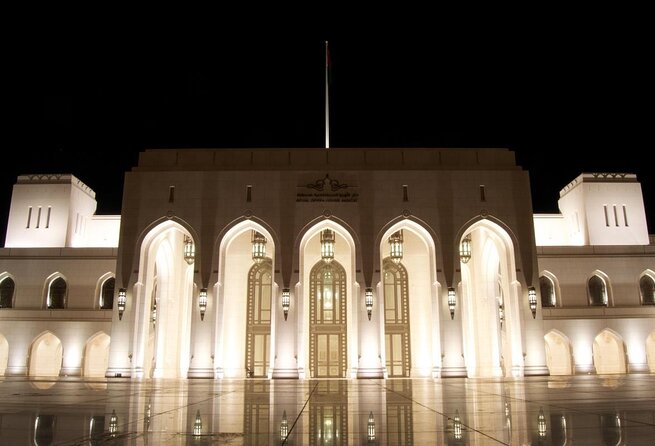
The Royal Opera House is a major architectural sight, even if you only see it from outside. It gives the tour a polished cultural stop between the older harbor and the wider coastal neighborhoods.
Qurum is the beach option. A stop here can be appealing if you want palm-lined shore rather than forts and markets. Still, the same schedule issue applies. If you get off, make sure you know when the next bus returns.
The Sultan Qaboos Grand Mosque is not included in the listed route. Several passengers hoped to see it, so do not buy this ticket expecting that landmark to be covered. You will need another arrangement if the mosque is a priority.
Audio commentary, staff, and comfort
The audio guide is available in several languages and uses a personal multi-track device, allowing you to select one language clearly. This is more useful than a generic ride around town because the commentary helps identify the districts and landmarks passing outside your seat.
Staff service has been a bright spot. Aimee helped one passenger get settled, while Jhay received specific praise for attentive assistance. The Filipino staff members have also been described as friendly and helpful, with free water available on the bus. Wi-Fi has been offered as well.
Muscat can be very hot, especially in summer. The open top is excellent for views, but heat can make a long wait at a stop unpleasant. In the hottest part of the year, staying on board for a full panoramic circuit may be more comfortable than trying to hop off repeatedly.
The bus is open-air, so protect yourself from the sun and keep water with you, even when complimentary water is available. The best seat for views is generally upstairs, but a shaded or lower seat may be wiser during the hottest hours.
The biggest issue: long waits and changing service
The hop-on hop-off idea sounds flexible, but the route frequency limits that flexibility. If buses are running about two hours apart, a 24-hour ticket does not let you casually explore every stop. In a practical day, you may manage only a few meaningful stops.
There is another concern. On some days, the full hop-on hop-off service has not operated as expected. Instead, the bus has run a panoramic tour with only a few minutes at each stop for photographs. That is a very different product from getting off to explore a souq, palace district, or museum.
The service can also change around cruise ship arrivals and departures. Cruise passengers have found the bus at or near the pier, and the schedule has sometimes shifted to match ship timing. This is useful, but it means you should confirm the day’s route before planning a tight schedule.
I would ask these questions before boarding:
- Is today’s service full hop-on hop-off or panoramic only?
- How often is the next bus expected?
- Can I reboard at the stop where I plan to get off?
- Does the route begin at Muttrah Souq or at the cruise pier today?
- Which sites are open or accessible?
Those answers matter more than the printed 24-hour or 48-hour duration.
Is $85 a fair price for Muscat?
At $85 per person, this is an expensive city bus. The price can be reasonable if you are arriving by cruise ship, have only one day, and want a broad look at Muscat without arranging separate transport. It can also make sense if you complete a full loop and use the bus to reach several distant districts.
The value drops if you stay aboard for a 1-hour-45-minute panoramic ride. In that case, you are paying a premium for views and commentary, with limited time at the sights. The cost is also hard to justify if the bus frequency prevents you from using the hop-on feature.
A 48-hour ticket could offer better value if the full service is running and you plan to spread your stops over two days. But do not assume that a longer ticket fixes a weak schedule. The most important factor is actual bus frequency during your dates.
Prebooking may cost less than buying on the day, based on the information supplied. Free water and Wi-Fi help a little, but they should be treated as pleasant extras rather than reasons to choose the tour.
Who should book this Muscat bus tour?
I would consider it for:
- Cruise passengers who want a simple city overview near the port.
- First-time visitors who need to understand Muscat’s spread-out districts.
- Independent visitors who prefer an audio guide to a private tour.
- People with limited mobility or limited walking time, since the bus connects distant areas.
- Sightseers who mainly want exterior views and photographs.
I would hesitate if your main goal is to spend long periods inside museums, browse the souq slowly, or visit every stop in one day. The slow bus interval works against that plan.
It is also a poor fit if the Sultan Qaboos Grand Mosque is your top priority, since it is not on the listed route. A private vehicle or another dedicated tour would be more suitable for a landmark-by-landmark day.
Final verdict: book it only after checking the day’s operation
The Big Bus Muscat tour offers a convenient overview of a city that is difficult to cover on foot. I like the broad route, the open-air views, the multilingual commentary, the friendly staff, and the way it links Muttrah, the palace district, forts, beaches, the opera house, and modern Muscat.
But the price is high, and the tour’s weak point is the schedule. Long gaps between buses can turn a flexible sightseeing day into a slow ride with only one or two useful stops. The occasional panoramic-only operation is an even bigger concern.
Book this tour if you are a cruise passenger or want a comfortable orientation ride. Before paying $85, confirm that full hop-on hop-off service is running, ask about bus frequency, and decide which two or three stops matter most to you. If the answer is panoramic only, choose it for the views, not for serious exploring.
FAQ
Where does the Big Bus Muscat tour begin?
The ticket redemption point is Muttrah Souq in Muscat. When cruise ships are in port, the bus may also begin or pick up passengers near the cruise pier.
How long does the tour take?
A full panoramic circuit takes approximately 1 hour and 45 minutes. A 24-hour or 48-hour ticket allows use over the selected period when the full hop-on hop-off service is operating.
How much does the tour cost?
The listed price is $85 per person. Prebooking may be cheaper than purchasing directly on the day.
What sights are included on the route?
The route includes Muttrah Souq, Al Farahidi Street, the Central Business District, Al Bustan Street, Al Saidiya Street, Al Alam Palace, Bab Al Muthaib Street, Mirani Fort, the harbor, and views of the Corniche and old quarter.
Does the tour visit the Sultan Qaboos Grand Mosque?
No. The mosque is not included among the listed stops.
Is an audio guide included?
Yes. A multilingual audio guide is included with the ticket.
Are food and drinks included?
No. Food and drinks are not included. Free water has been provided on the bus, and Wi-Fi has also been available.
Can I hop on and off as often as I want?
The ticket permits hopping on and off at the stops when the full service is running. In practice, bus gaps can be about two hours, so you may not have time to visit every stop.
Can service animals join the tour?
Yes. Service animals are allowed, and most people can participate.
Can I cancel for a refund?
Yes. You can cancel at least 24 hours before the local start time for a full refund. Changes or cancellations made less than 24 hours in advance are not accepted for a refund.
Newest Muscat trips on the site
- From Muscat: Nizwa & Al Hamra with Jebel Shams Night Stay★ 4.8 · 3 reviews
- Oman 3-Days 2-Night Shared Roundtrip Tour – Explore Oman’s Best★ 5.0 · 3 reviews
- Muscat trasfer: airport trasfer to/from hotel in muscat★ 5.0 · 3 reviews
- Watching Dolphins, Muscat★ 4.5 · 3 reviews
- Guided Private Tour to Wakan Village in Oman★ 5.0 · 3 reviews
- Muscat: Full-Day City and Wadi Shab Tour★ 4.3 · 3 reviews
- Muscat by Night Sightseeing Tour★ 4.8 · 3 reviews
- Wadi Shab full day tour (Muscat tours):Oman Shore excursions★ 4.5 · 3 reviews
Muscat Tours, compared.
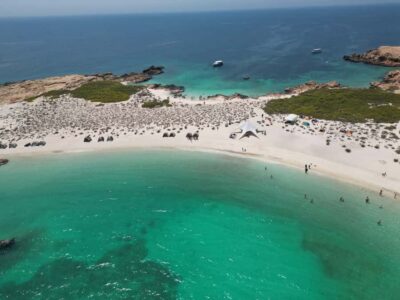
Daymaniat Islands Snorkeling Trip with Brunch
Read our review →
Wahiba Desert and Wadi Bani Khalid Guided Group Tour
Read our review →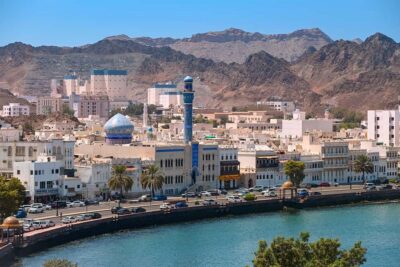
Half-Day Sightseeing Essentials Tour and Audio Guide
Read our review →

Daymaniat Islands Snorkeling Tour with Refreshments
Read our review →