
Reviewed · JEBEL AKHDAR TOURS
Private Tour to Jebel Akhdar Al Suwjara Village
Jebel Akhdar is not just a mountain viewpoint. This day trip links ancient Omani villages, working water channels, mountain gardens, and a cliffside settlement in one long outing from Muscat. The final walk into Al Suwjara is the most unusual part, with a descent, wooden bridge, and climb up to old stone-and-mud homes.
I like the mix of culture and scenery, especially the Al Kattmyn irrigation system and the chance to see Birkat Al Mouz before heading higher. I also like having a private 4WD, since the mountain road calls for the right vehicle and gives your group more room to pause. The main drawback is the pace: eight hours is a full day, lunch is not included, and Al Suwjara requires a demanding walk.
Key points to know before booking
- Birkat Al Mouz opens the day with ruins, banana plantations, and old village views.
- Al Kattmyn is one of Oman’s five UNESCO-recognized aflaj irrigation systems.
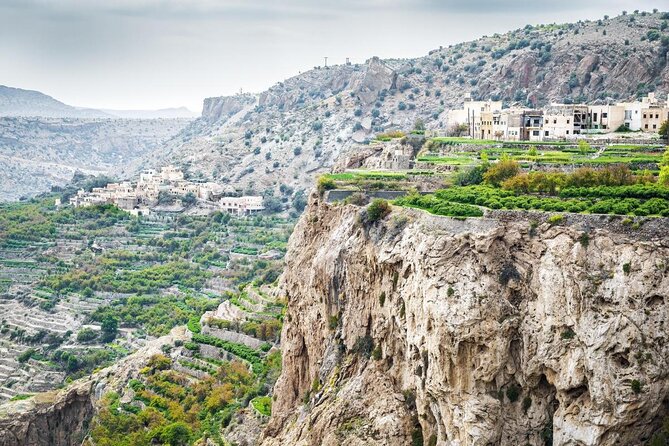
- Jebel Akhdar brings cooler mountain air, fruit plantations, rose gardens, and broad valley views.
- Diana Point adds a well-known viewpoint connected with Princess Diana’s visit.
- Al Suwjara requires a mountain walk across a wooden bridge to reach the old village.
- The $180 per-person price covers private 4WD transport, an English-speaking guide, water, and entrance fees, but not meals.
Why this Muscat day trip feels different
Many mountain outings from Muscat focus on a single lookout, then turn around. This one gives you several kinds of Oman in sequence: a ruined village, an old irrigation network, high mountain farms, and a settlement built into a steep slope.
That variety gives the day a useful shape. At Birkat Al Mouz, you begin with Oman’s older village architecture and agricultural setting. At Al Kattmyn, you see how water made life possible in a dry country. Higher up, Jebel Akhdar changes the temperature and the views. Al Suwjara finishes the day with a walk through an old community rather than a simple photo stop.
I especially like the private format for this route. You are not sharing the 4WD with a large group, so your day can feel less rushed, even though the schedule itself is full. Guides who have led this outing include Ahmed, Alkiyumi, and Ghaith Al Hadi. Guide assignments can vary, but an English-speaking Omani guide is included.
The experience is best for someone who wants more than scenery. If you enjoy old buildings, local engineering, mountain walking, and small settlements, you will get much more from this day than from a quick trip to a resort viewpoint. If you dislike uneven paths or long drives, the route may feel strenuous.
more jebel akhdar days
- From Muscat: Nizwa and Jebel Akhdar Tour with Lunch
★ 4.8 · 319 reviews - Full Day Private Nizwa/Jebel Akhdar
★ 5.0 · 205 reviews - Muscat: 4×4 Adventure Through Jebel Akhdar and Nizwa
★ 4.9 · 115 reviews
Birkat Al Mouz: ruins beside banana country
The first stop is Birkat Al Mouz, located off the old Muscat to Nizwa road. The name means Banana Pool, a useful clue to the village’s agricultural past. Banana plantations grow in the area, and the contrast between green plants and dry stone is part of the appeal.
You have about two hours here, with admission included. That is enough time to walk through the ruins without treating them as a rushed roadside stop. The old houses and walls give you a first look at how Omani villages were built around shade, water, and close community life.
The ruins are famous in Oman, but fame does not make them polished. That is the point. You are seeing an old settlement in a weathered state, with broken walls and open views rather than restored rooms filled with displays. I find this more useful than a staged heritage site because the setting makes you think about how the village worked.
Wear shoes with a firm sole. The route includes walking through old structures, and the ground may not be as smooth as a city pavement. You should also bring sun protection, since the higher mountain air later in the day can feel cooler, but the lower village may still be bright and warm.
Al Kattmyn shows how Oman moved water
The next stop focuses on the Al Kattmyn irrigation system, one of Oman’s five aflaj irrigation systems recognized by UNESCO. You have about an hour to see this system and understand why it matters.
An aflaj system channels water through a network that supports farms and settlements. At Al Kattmyn, the value is not only in seeing a channel. You are looking at the practical link between mountain water, cultivated land, and village life.
This stop also helps explain the gardens around Jebel Akhdar. Fruit trees and roses do not appear by accident in such a dry region. They depend on careful water management, and the falaj system gives you a clear example of that work.
An hour is a sensible amount of time here. You can inspect the channels and hear the basic story without turning the stop into a technical lesson. If you want detailed engineering information, use your private setting and ask your guide specific questions. The guide can add local context in a way a signboard often cannot.
Jebel Akhdar brings cooler air and wide views
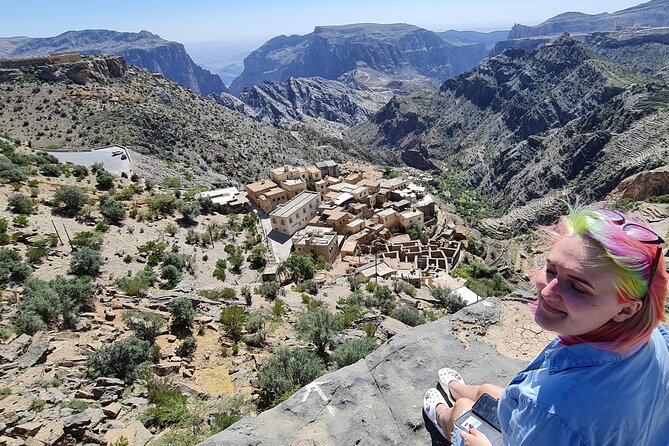
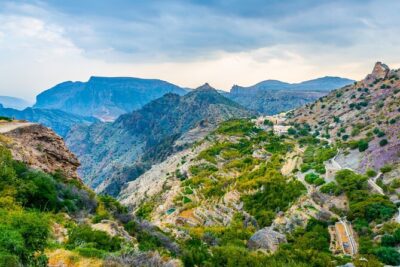
Jebel Akhdar means Green Mountain, and the name fits the cultivated parts of the range. The mountain is known for fruit plantations and rose gardens, with valleys and slopes opening into broad views.
You have about two hours for the main Jebel Akhdar stop. That gives you time to walk through the hills and pause at viewpoints. The scenery is the star here, but the walking matters. A short path can show you how the mountain farms fit into the slopes better than a single roadside photograph.
The temperature is another reason to come up from Muscat. The mountain is described as a cooler haven, and the change can be welcome after time in the capital. Still, do not treat the altitude as a guarantee of cold weather. Bring a light layer, along with sun protection and water.
Rose gardens are an especially appealing seasonal feature. If your timing matches the flowering period, you might find rose products available for purchase. The exact garden conditions are not specified, so it is best to think of the gardens as part of the area rather than a guaranteed full bloom display.
The mountain road is an important part of the experience. A 4WD is required for the route, and the tour provides a comfortable four-wheel-drive vehicle. The climb can feel slightly intimidating if you are not used to steep mountain roads, but a careful driver makes a major difference. Safety and comfort depend more on the driver and vehicle than on the view at the top.
more half-days around Muscat worth comparing
- Full-Day Private Wahiba Sands Desert and Wadi Bani Khalid Tour
★ 5.0 · 291 reviews - Half-Day Private Muscat City Tour – Top Landmarks in Just 4 Hours
★ 5.0 · 256 reviews - Oman: Private Muscat City Tour With Pick-up/ Drop-off
★ 4.4 · 234 reviews - Nizwa Fort-Nizwa Souq-Misfah Al Arbyeen-Jebel Shams – Private Full Day Tour
★ 5.0 · 220 reviews
Diana Point is a quick but memorable pause
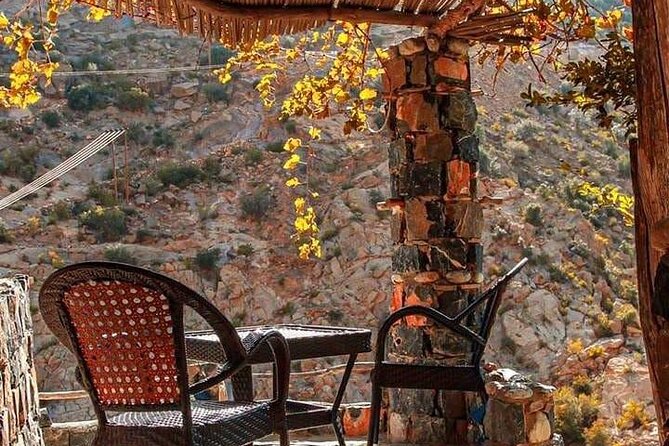
Diana Point is included among the mountain viewpoints. It is associated with Princess Diana, who stopped at the location, and the name has become one of Jebel Akhdar’s best-known references.
This is a good place to pause and take in the valley rather than expect a long activity. The appeal is the drop, the open mountain view, and the connection to a well-known visit. Keep your expectations sensible: this is a viewpoint within a larger mountain day, not a separate attraction with a long program.
I like the way this stop breaks up the walking and driving. You can catch your breath, take photographs, and let the guide point out the surrounding valleys. The private format is useful here because your group can spend a little more time looking if conditions allow, though the full schedule still needs to be respected.
Al Suwjara requires effort, then rewards it
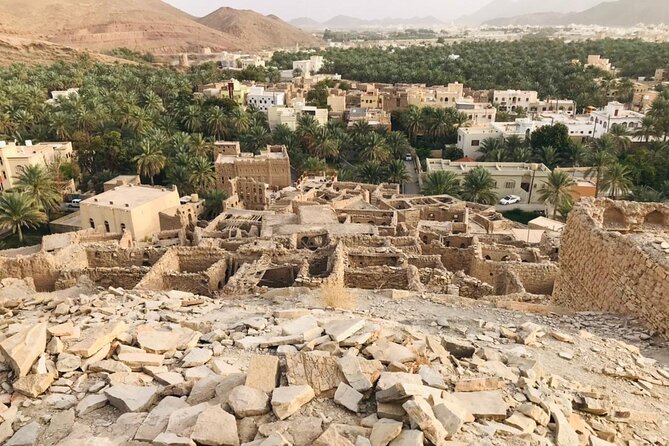
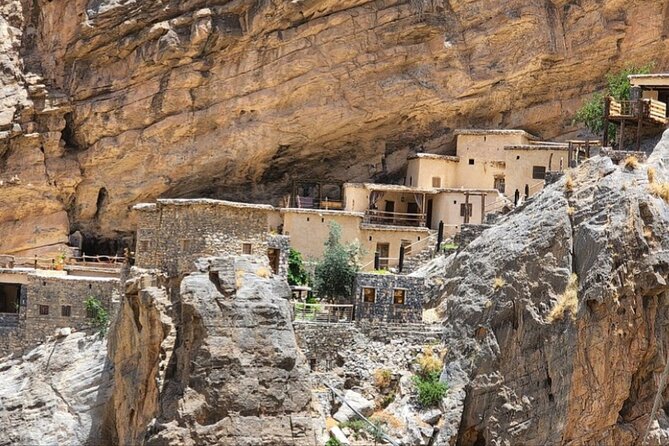
Al Suwjara is the most distinctive stop on the route. The settlement began with one family and is now divided into an old village and a new village. The old houses were built from mountain stone and mud, while later ideas have been used to create a small tourism setting.
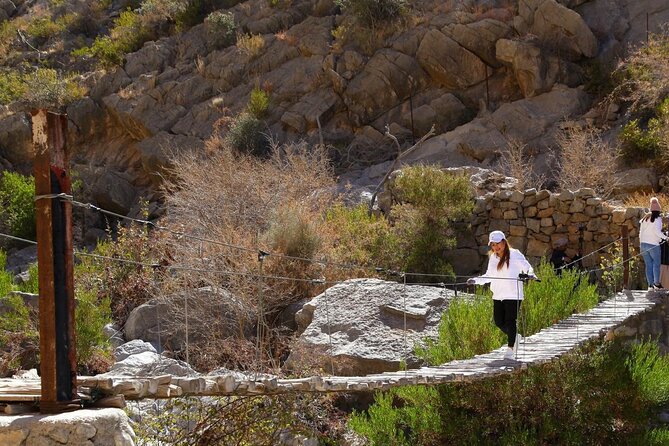
The access details matter. The new village is about a 20-minute hike from the old one. Four-wheel-drive vehicles can reach the new village, but the old village requires you to climb down one side of the mountain, cross a wooden bridge, and climb up the other side to reach the houses.
You have about three hours here, including the walk and time in the village. That is generous enough to avoid treating Al Suwjara as a quick photograph from the road. It is also the part of the day that demands the most from you physically.
The route can feel exciting and slightly scary. You need steady footing, comfortable clothing, and shoes suitable for a descent and climb. The supplied information does not give an exact step count or trail condition, so do not assume this is an easy stroll. If you have limited mobility, ask the operator before booking.
The reward is a close look at village architecture shaped by the mountain. The old homes are not generic stone buildings. They are part of a settlement that used the available rock, slope, and local building methods. You can see how the old village differs from the newer area and how the site has been adapted for visitors without losing its basic character.
The Cliff Guest House adds a modern layer
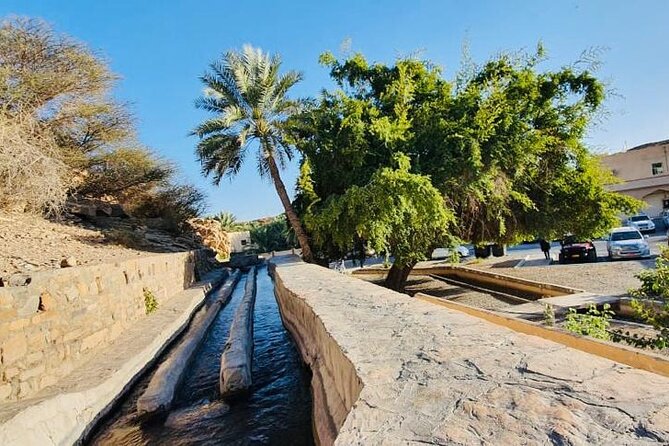
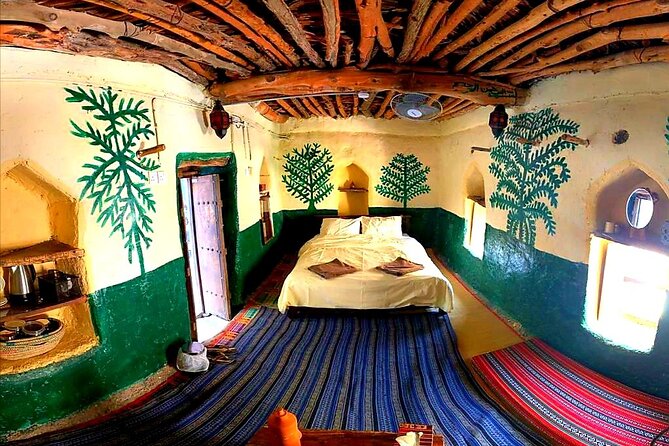
The Cliff Guest House began with one room and grew over three years into a more established stop with seven rooms, additional renovations, and views over the mountain cliff. Its construction uses stone from the mountain, and the style keeps a traditional feel.
You should think of this as part of the village story, not a separate hotel tour. The guest house shows how an old settlement can support a small visitor business while keeping its stone-built character. You may see different suite styles and the mountain-facing design, depending on which areas are open during your visit.
This is one of the more interesting contrasts of the day. Birkat Al Mouz presents ruins, while Al Suwjara shows old homes connected with a living tourism project. The result is not a museum visit. It is a place where heritage and present-day use sit side by side.
The walk remains the deciding factor. The guest house cannot remove the need to reach the old village on foot. I would not book this outing based only on the promise of a cliff view. Book it because you are willing to make the climb to see the village itself.
What the $180 price includes
At $180 per person, this is not a budget day trip. The price is easier to justify if you are traveling as a small private group and want transport, a guide, and entrance costs arranged in one package.
The included 4WD is important, not decorative. Jebel Akhdar requires the proper vehicle, and arranging a suitable mountain transfer separately could complicate the day. Pickup and drop-off in the Muscat area are included, along with bottled water, entrance fees, and an English-speaking Omani guide.
Private touring also changes the value. You are paying for a group of your own rather than a seat on a standard shared outing. That can matter on a long eight-hour day, especially when you want to ask questions about the aflaj, village life, or the mountain farms.
The price does not include breakfast or lunch. Plan for that before pickup. The exact meal arrangements are not provided, so you should ask Star Tours about food timing and available options rather than assume a restaurant stop is built in.
Group discounts may be available, making the per-person cost more attractive for families or friends. Compare the price against the value of a dedicated 4WD, guide, transfers, water, and entrance fees. For a solo participant, it is a premium purchase. For a private group splitting the vehicle and guide cost, it may make better sense.
Timing, pickup, and the shape of the day
The activity lasts about eight hours and begins and ends at the Star Tours Oman meeting point on 18th November Street in Muscat. Pickup is offered in the Muscat area, so confirm the exact collection arrangement when booking.
The four stops add up to about eight hours: two hours at Birkat Al Mouz, one hour at Al Kattmyn, two hours at Jebel Akhdar, and three hours at Al Suwjara. Driving time is part of the day, so the schedule is full rather than leisurely.
That does not mean you spend eight hours rushing between photo stops. The route has real walking and time for the guide to explain what you are seeing. Still, leave Muscat prepared for a long outing. Eat before departure, carry personal snacks if needed, and keep water close even though bottled water is supplied.
The tour is private, and most people can participate. The Al Suwjara path is the key exception in practical terms, because the old village requires a mountain descent, bridge crossing, and climb. Ask about the walk if you have concerns about balance, endurance, or uneven ground.
The guides can shape the experience
The route has several stops where a guide adds real value. Ruins can look like piles of old stone if no one explains how the village and farms fit together. An irrigation channel can seem simple until you understand how it supported agriculture in a dry climate.
English-speaking guides named in connection with this experience include Ahmed, Alkiyumi, and Ghaith Al Hadi. Their reported strengths include safe driving, friendliness, and clear information about the places along the route. Your assigned guide may be different, so treat those names as examples rather than a guarantee.
A private tour lets you ask better questions. Ask how the water system serves nearby farms, how the old and new parts of Al Suwjara differ, and which fruits or rose products are associated with Jebel Akhdar. That turns the day from a scenic transfer into a more useful introduction to mountain life in Oman.
Who should book this experience
You should consider this tour if you want a broad introduction to the Al Hajar mountain area in one day. It suits couples, families with active older children, and small groups who value a private vehicle and guide.
It is also a good choice if you want both natural scenery and built heritage. Birkat Al Mouz and Al Suwjara provide the strongest cultural content, while Jebel Akhdar and Diana Point provide the main views. The Al Kattmyn falaj ties the two sides together.
You may prefer another outing if you want a relaxed resort day, a guaranteed meal, or a short walk with little climbing. The Al Suwjara section is not optional in spirit. It is a central reason to book this particular route, and you should be ready for the effort.
The tour has earned a perfect 5 rating from eight published ratings, with repeated praise for the views, cooler weather, walking, safe driving, and guide service. Those are also the areas where your expectations should be strongest. It is a scenic, active, full-day mountain trip, not a slow heritage museum visit.
Cancellation and booking details
Free cancellation is available if you cancel at least 24 hours before the experience start time. A cancellation within 24 hours is not refunded, and changes within that same period are not accepted.
Confirmation is received at booking. Public transportation is nearby, but the supplied meeting point is Star Tours Oman on 18th November Street, and the activity returns there after the tour.
Should you book the Jebel Akhdar Al Suwjara tour?
I would book this tour if you have one full day from Muscat and want to connect Oman’s mountain scenery with old villages and water engineering. The strongest reasons are the private 4WD, the English-speaking guide, the range of stops, and the rare chance to walk into Al Suwjara’s old cliffside village.
I would pause before booking if you need an easy-access outing or if $180 per person feels high without meals included. The value improves for a private group, and the route earns its price through transport, guide service, entrance fees, and the amount covered in eight hours.
Bring firm walking shoes, sun protection, water, and a light layer. Eat before you leave, expect a long day, and treat the walk into Al Suwjara as the main test. If that sounds like the kind of effort you want, this is a strong way to see the Green Mountain beyond its most obvious viewpoint.
FAQ
How long does the tour last?
The tour lasts approximately eight hours, including the four scheduled stops and the driving between them.
Is pickup from Muscat included?
Yes. Pickup and drop-off are offered in the Muscat area. The stated meeting point is Star Tours Oman on 18th November Street in Muscat.
Is this a private tour?
Yes. Only your group participates in the activity.
What type of vehicle is used?
Transportation is provided in a comfortable 4WD vehicle. A four-wheel-drive vehicle is needed for the Jebel Akhdar mountain route.
Is a guide included?
Yes. An English-speaking Omani tour guide is included. Guides associated with this experience include Ahmed, Alkiyumi, and Ghaith Al Hadi, though the assigned guide can vary.
Are entrance fees included?
Yes. Entrance fees for the included stops are covered.
Are breakfast and lunch included?
No. Breakfast and lunch are not included in the tour price.
Can I cancel for a full refund?
Yes, if you cancel at least 24 hours before the experience start time. Cancellations within 24 hours are not refunded, and changes made within 24 hours are not accepted.
Newest Muscat trips on the site
- From Muscat: Nizwa & Al Hamra with Jebel Shams Night Stay★ 4.8 · 3 reviews
- Oman 3-Days 2-Night Shared Roundtrip Tour – Explore Oman’s Best★ 5.0 · 3 reviews
- Muscat trasfer: airport trasfer to/from hotel in muscat★ 5.0 · 3 reviews
- Watching Dolphins, Muscat★ 4.5 · 3 reviews
- Guided Private Tour to Wakan Village in Oman★ 5.0 · 3 reviews
- Wadi Shab full day tour (Muscat tours):Oman Shore excursions★ 4.5 · 3 reviews
- Muscat: Full-Day City and Wadi Shab Tour★ 4.3 · 3 reviews
- Muscat by Night Sightseeing Tour★ 4.8 · 3 reviews
Jebel Akhdar Tours, compared.
Nizwa Fort-Nizwa Souq-Birkat Al Mouz-Jebel Akhdar – Private Full Day Tour
Read our review →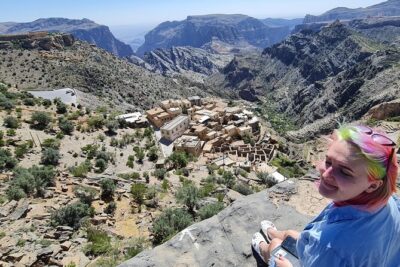
AMOUAGE: Full Day Private Trip to Nizwa and Al Jabal Akhdar
Read our review →
Private Day Trip to Nizwa, Jabal Akhdar (Green Mountain) & Birkat Al Moz
Read our review →
Browse the lists this tour appears in