
Reviewed · MUSCAT TOURS
Guided Walking Tour of Sultan Qaboos Grand Mosque in Muscat
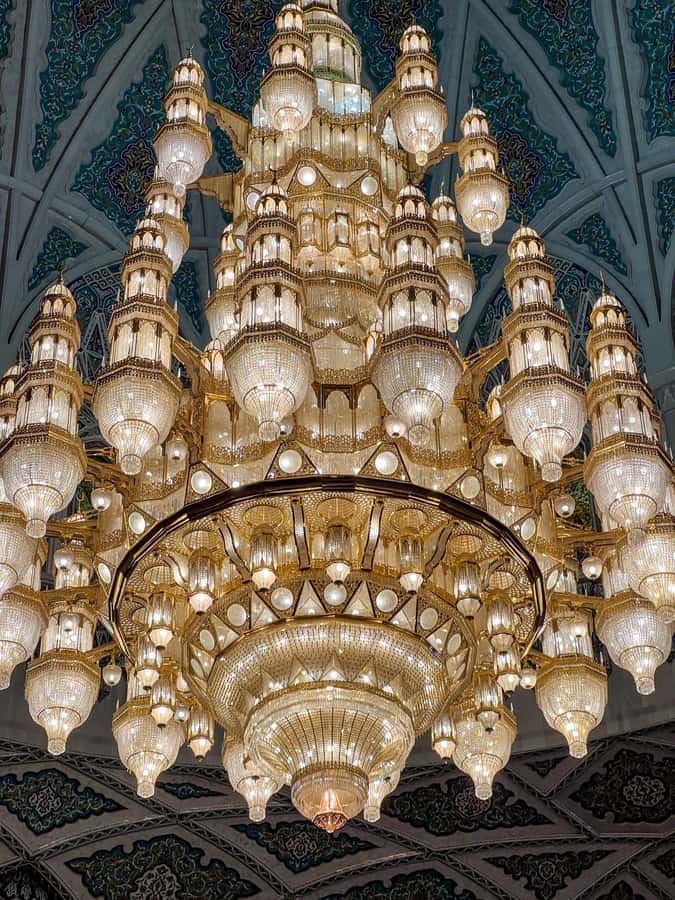
The 50-meter central dome, five minarets, and gleaming marble courtyard make Sultan Qaboos Grand Mosque a powerful first look at Oman. Inside, the huge hand-woven carpet and 14-meter crystal chandelier are the headline sights, but the smaller details reward a guide’s explanation.
I like the one-hour format and the $10 price, which makes this an easy cultural addition to a Muscat morning. I also like that the tour moves beyond photo stops, explaining Arabic calligraphy, geometric designs, Omani woodwork, and the late Sultan Qaboos’s role in shaping the mosque.
The main consideration is clothing. Women need long sleeves, long trousers or a long skirt, plus a headscarf, while men need long trousers and covered shoulders. Transportation is not included, so you must reach the mosque on your own.
Key points to know before you go
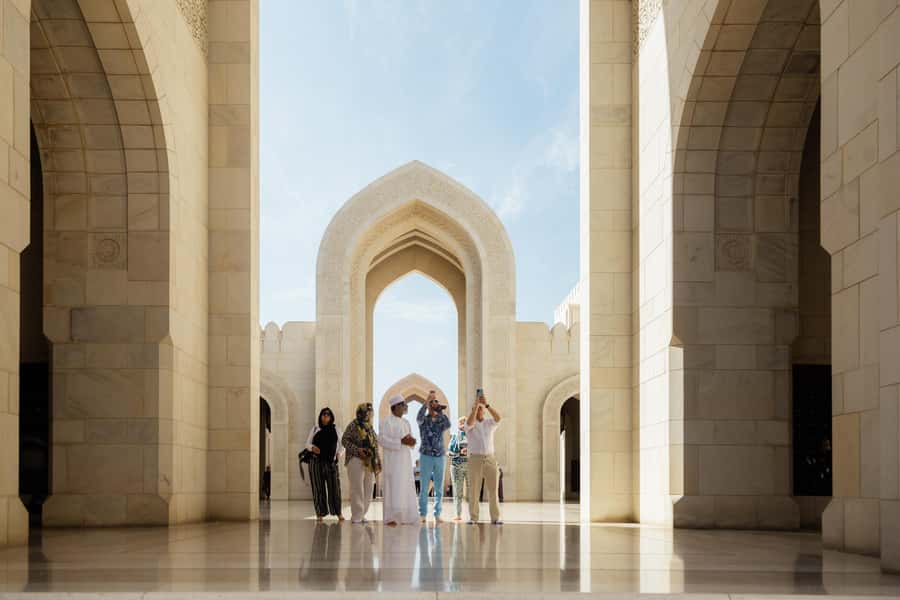
- A one-hour introduction: The tour covers the main entrance, prayer halls, courtyards, corridors, gardens, and major artworks without taking up half your day.
- Record-sized interior details: The main prayer hall contains a carpet covering more than 4,000 square meters and a 14-meter chandelier decorated with Swarovski crystals.
- A guide adds real value: Small features such as Quranic verses, geometric patterns, carved teakwood, and mixed architectural influences are easy to miss without explanation.
- Strict modest dress: Bring your own headscarf and suitable clothing. These items are not included.
- Easy meeting point: Meet at the main visitor entrance near the central gate facing the main parking area, and arrive 10 minutes early.
- Strong value for culture lovers: At $10 per person, this is a low-cost way to understand Muscat’s most important modern religious building.
Why Sultan Qaboos Grand Mosque deserves an hour
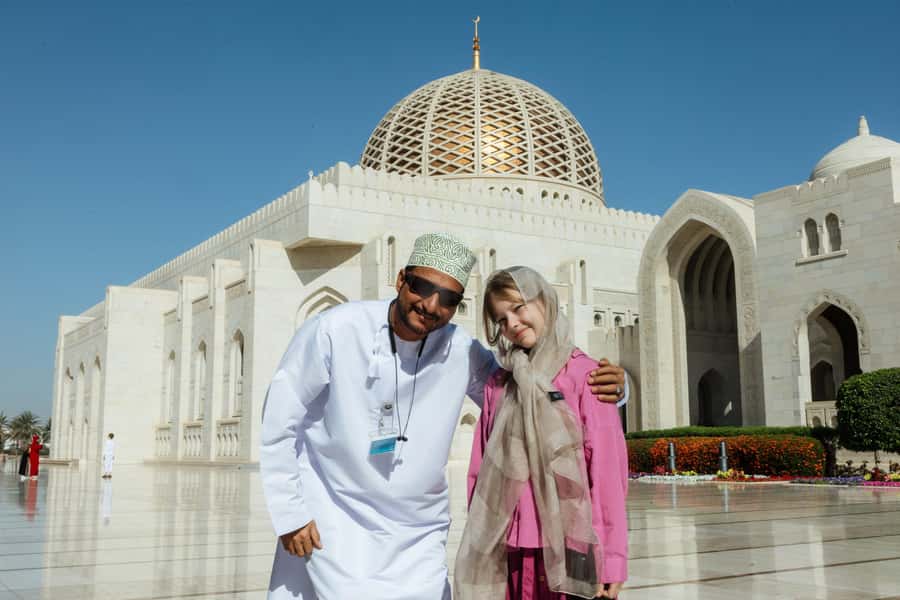
This is not simply a grand building to photograph from the outside. It is a working place of worship designed to express Oman’s faith, artistic traditions, and modern national identity.
The mosque was inaugurated in 2001 to mark the 30th year of Sultan Qaboos bin Said’s reign. It was envisioned as a gift to the country, with a message centered on harmony, education, and faith. That context helps explain why the complex feels both ceremonial and welcoming.
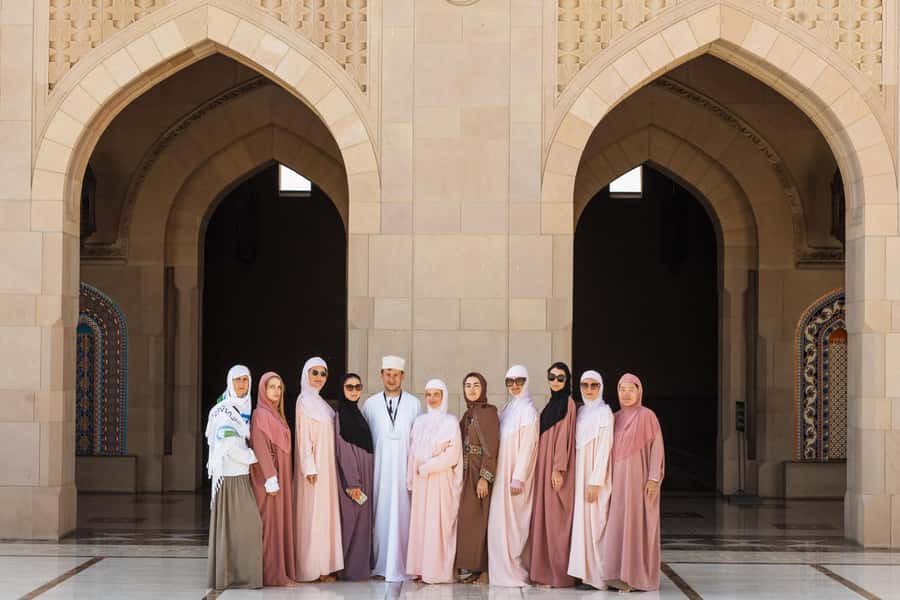
You begin at the main visitor entrance, near the central gate facing the main parking area. Look for a guide holding a GidOman sign. The meeting arrangement is simple, but the mosque complex is large enough that arriving 10 minutes early is sensible.
The tour is conducted in English. The supplied information does not give a guide’s name, and guides may vary, but the strongest praise has focused on clear explanations and the way the guide answers questions. That matters here because many of the building’s most interesting features are not obvious at first glance.
more walking tours in Muscat
- Muscat: Guided Walking Tour of Corniche, Souq & Mutrah Fort
★ 5.0 · 14 reviews - Private Full Day Guided Balcony Walk Hiking to Jebel Shams
★ 5.0 · 11 reviews - Full Day Guided Tour to Balcony Walk and Hidden Lake With Pickup Included
★ 5.0 · 8 reviews
The entrance, minarets, and central dome
The first view establishes the scale of the place. Five soaring minarets frame the complex, with each one representing one of the Five Pillars of Islam. The central dome rises 50 meters above the mosque, giving the main structure a strong vertical focus.
The exterior uses ivory and red-brown marble, with elegant arches and polished stone surfaces. The effect is formal without feeling harsh. Open-air corridors and carefully kept gardens soften the large blocks of masonry.
Your guide can help you read the design rather than simply admire it. Traditional Omani motifs appear alongside influences associated with Persian, Ottoman, and Mughal art. Carved teakwood details add warmth, while the repeating arches and geometric shapes create order across a very large site.
This is a good point to slow down and look at proportions. The mosque is impressive because of its size, but its design also depends on repetition: columns, arches, patterns, and carefully framed views. A guide’s comments turn those repeated elements into a visual language instead of background decoration.
Marble courtyards and peaceful gardens
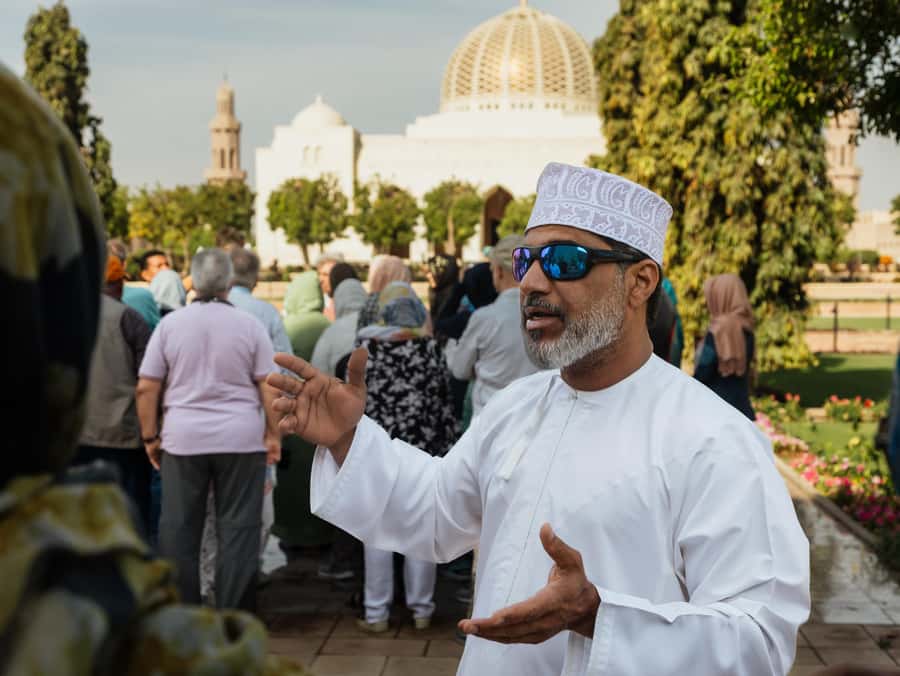
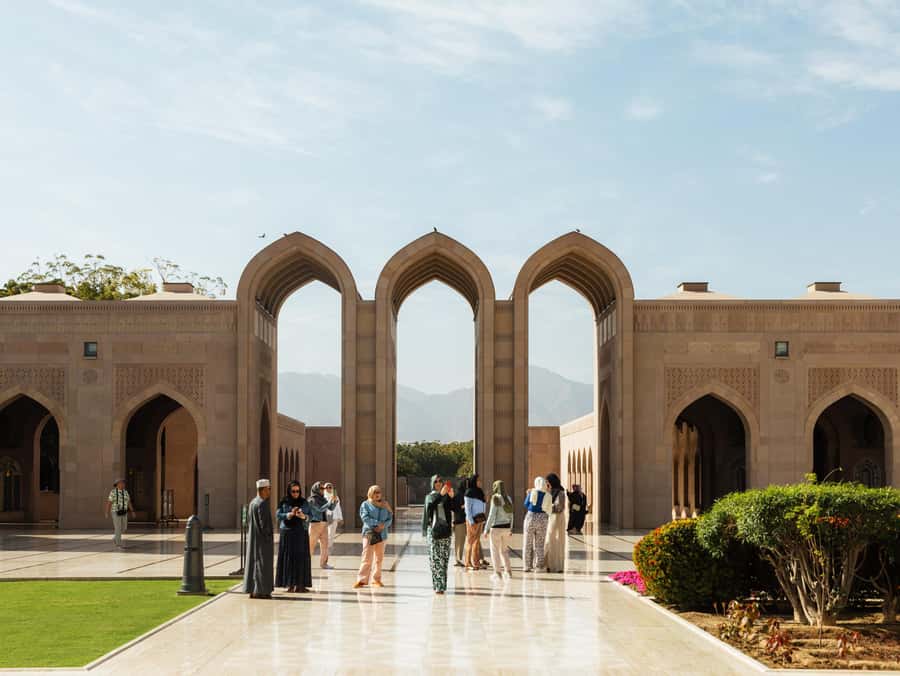
From the entrance, you walk across a broad marble courtyard surrounded by floral gardens and archways. The contrast is striking. Muscat’s roads and daily activity feel far away once you are among the stone, greenery, and reflecting pools.
The gardens are more than a decorative border. They give the complex breathing room and create quieter places to look back at the mosque. You will find cooling greenery, water features, and several good angles for photographs of the exterior.
Photography is allowed in most areas, but this remains a religious site. Keep your camera use respectful, follow the guide’s directions, and avoid treating prayer spaces like a photo studio. The tour description does not promise access to every part of the complex at every moment, so your guide’s instructions matter.
Comfortable shoes are a good idea. The tour is only one hour, but it is a walking visit across courtyards, corridors, and interior spaces. The mosque provides a bottle of water as part of the experience, though it is still wise to dress for Muscat’s warmth.
The main prayer hall and its giant carpet
The main prayer hall is the tour’s visual centerpiece. Its floor is covered by one of the world’s largest hand-woven carpets, measuring more than 4,000 square meters.
The carpet took four years to make, with 600 artisans involved in the weaving. Those numbers give you a better sense of its scale than a quick photograph can. Look for the intricate patterns and the way the design works with the architecture above it.
The carpet is not just a record-sized object. Its patterns help create a unified interior, linking the floor to the arches, walls, and ceiling. Islamic art often uses geometry and repetition to suggest harmony, and this room makes that idea easy to see.
A guide is particularly useful here. You can learn how the designs relate to Islamic artistic traditions and how the materials and craftsmanship reflect Omani care for detail. Without that explanation, it is easy to spend your time looking only at the carpet’s size.
more half-days around Muscat worth comparing
- Muscat: Wahiba Desert and Wadi Bani Khalid Guided Group Tour
★ 4.8 · 820 reviews - Muscat: Half-Day Sightseeing Essentials Tour and Audio Guide
★ 4.2 · 598 reviews - Muscat: Southern Treasures & Wadi Shab Tour with Audio Guide
★ 4.6 · 286 reviews - Muscat: Evening Guided City Highlights Tour by Van
★ 4.8 · 175 reviews
The 14-meter crystal chandelier
Above the prayer hall hangs a colossal 14-meter crystal chandelier decorated with hundreds of thousands of Swarovski crystals. It is an extravagant sight, but it does not feel disconnected from the room. The chandelier draws your eye upward and balances the visual weight of the carpet below.
Take a moment to compare the two. The carpet spreads across the floor in a broad, detailed field, while the chandelier gathers light above you. Together, they frame the prayer hall from bottom to top.
Your guide will also point out Arabic calligraphy, Quranic verses, mosaic tilework, and geometric designs on the walls and domed ceiling. These details give the room its spiritual character. They are not random decoration, and the meaning behind them is part of what you are paying to understand.
The interior may be the busiest part of your visit in terms of visual information. If you try to photograph everything, you may miss the explanation. I would first listen, then take a few careful photographs after you understand what you are seeing.
The women’s prayer hall and smaller details
The women’s prayer hall offers a more intimate space within the larger complex. It is equally ornate, but its smaller scale lets you notice details that can disappear in the main hall.
The tour highlights carved wooden doors, delicate lighting, and thoughtful design. This stop also helps you understand that the mosque’s approach to decoration and worship is not limited to one grand central room.
Look closely at the transitions between materials. Stone, wood, glass, and patterned tile each create a different mood. The carved teakwood doors bring a more tactile quality, while the lighting keeps the interiors calm rather than overly theatrical.
For many people, this is where the visit becomes more personal. The main prayer hall impresses through size, but the women’s hall shows how care was given to smaller spaces too. It is a useful reminder that the mosque was designed as a complete religious complex, not just as a monumental exterior.
Corridors, displays, and the Sultan Qaboos legacy
The open-air corridors are lined with polished sandstone columns and informative displays. These passages connect the major spaces while offering views toward the gardens.
The displays and the guide’s commentary place the building in modern Omani history. Sultan Qaboos bin Said’s legacy is closely tied to the mosque, which was created during his reign and inaugurated for its 30th anniversary.
The tour presents the mosque as a symbol of Oman’s cultural renewal and as an expression of the late sultan’s commitment to harmony, education, and faith. That does not mean the visit becomes a political lecture. Instead, the historical context helps you understand why this building matters so much in Muscat.
The architectural mix is also worth noting. Traditional Omani forms appear with Persian, Ottoman, and Mughal influences. The result is not a single imported style. It is a deliberate combination that gives the mosque a distinctive identity.
What the $10 price really buys you
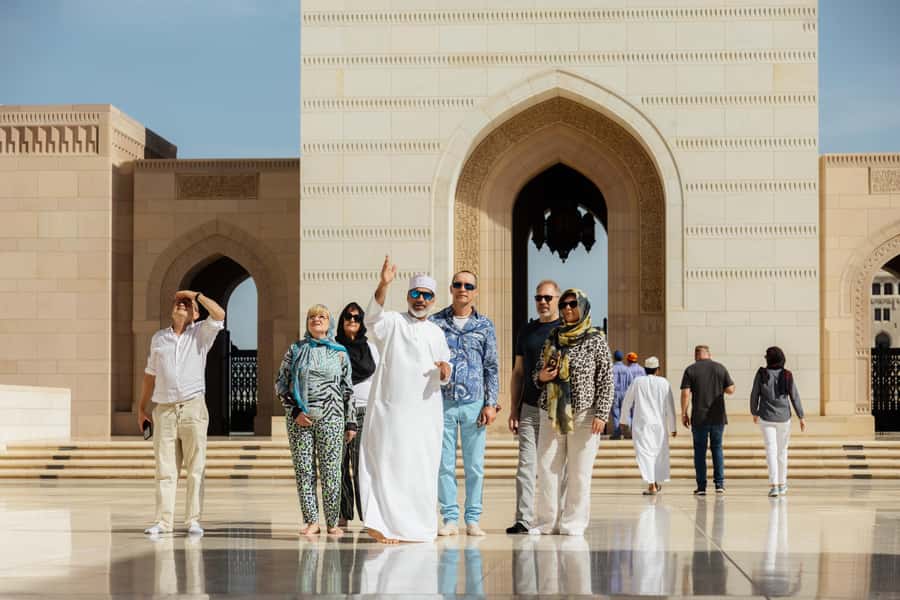
At $10 per person, this is inexpensive for Muscat. The price includes the guided tour and bottled water, but not transportation or suitable clothing.
You are not paying for a long excursion or a complicated program. You are paying for one focused hour and the interpretation that comes with it. That is good value if you want to understand Islamic art and Omani architecture rather than simply walk through the building alone.
The short length is also a strength. You can fit the mosque into a wider Muscat day without sacrificing several hours. First-time visitors often need a clear introduction, and this format provides one without overloading the schedule.
There is a limit, too. One hour passes quickly in a complex this large. You will see the major areas and hear useful context, but you should not expect a slow, specialist study of every inscription, room, and architectural influence.
For that reason, I see this as an introductory tour rather than a full architectural seminar. At this price, that balance works well.
Who will get the most from this visit
This tour suits first-time visitors, culture lovers, and anyone who wants a manageable introduction to Muscat. It is especially useful if you are unsure how to read Islamic design or want help understanding what you are seeing.
Families may also appreciate the one-hour length, although every participant must be prepared to follow modest dress rules and respectful behavior. The tour’s walking format keeps things active, but comfortable footwear remains important.
It is a good fit for independent visitors who have arranged their own transportation. Since no pickup is included, you need to plan your route to the mosque and allow time to find the main visitor entrance.
You may want a longer or more specialized visit if your main interest is photography, architecture, or religious studies. The tour gives you a solid foundation, but its purpose is broad access and clear explanation, not exhaustive detail.
Dress, timing, and respectful behavior
Plan your clothing before leaving your accommodation. Women must wear long sleeves and long trousers or a long skirt, and must bring a headscarf. Men must wear long trousers and cover their shoulders.
A headscarf or other suitable clothing is not provided, so do not assume you can borrow what you need at the entrance. This is the most important practical point in the booking information.
Arrive 10 minutes early at the main visitor entrance. The guide will be holding a GidOman sign near the central gate facing the main parking area.
Photography is permitted in most areas, but respect the religious setting. Keep voices low in prayer spaces, follow instructions about where to stand, and dress with the same care you would show at any active place of worship.
The tour is offered in English, and availability depends on the selected starting time. Since no specific start times are provided here, check the available options before booking.
My verdict: an easy Muscat choice for $10
I would book this tour if I were visiting Muscat for the first time and wanted a short, affordable introduction to Oman’s most important modern mosque.
The strongest reasons are clear: the remarkable carpet and chandelier, the mix of Omani and wider Islamic design, the calm courtyards, and the guide’s help with details that are easy to miss. The consistently high rating of 4.9 from 12 reviews also fits the experience described, especially the repeated praise for informative guides and interesting explanations.
I would skip it only if you cannot meet the dress requirements, have no way to reach the mosque, or prefer to spend much longer studying the building at your own pace. For most visitors, though, one hour is a sensible amount of time, and $10 is a fair price for the context it adds.
FAQ
How long is the Sultan Qaboos Grand Mosque walking tour?
The tour lasts one hour. It covers the main entrance, courtyards, prayer halls, corridors, gardens, and key architectural details.
How much does the tour cost?
The tour costs $10 per person. A guided tour and bottled water are included.
What language is the tour offered in?
The live tour guide speaks English.
Where do I meet the guide?
Meet at the main visitor entrance of Sultan Qaboos Grand Mosque, near the central gate facing the main parking area. Look for a guide holding a GidOman sign, and arrive 10 minutes early.
What should I wear to the mosque?
Women must wear long sleeves, long trousers or a long skirt, and bring a headscarf. Men must wear long trousers and cover their shoulders. You should also wear comfortable footwear.
Is transportation included?
No. You are responsible for getting to and from the mosque. A headscarf and suitable clothing are also not included.
Can I cancel or pay later?
You can cancel up to 24 hours before the tour for a full refund. The reserve-now, pay-later option lets you book without paying immediately.
Newest Muscat trips on the site
- From Muscat: Nizwa & Al Hamra with Jebel Shams Night Stay★ 4.8 · 3 reviews
- Oman 3-Days 2-Night Shared Roundtrip Tour – Explore Oman’s Best★ 5.0 · 3 reviews
- Muscat trasfer: airport trasfer to/from hotel in muscat★ 5.0 · 3 reviews
- Watching Dolphins, Muscat★ 4.5 · 3 reviews
- Guided Private Tour to Wakan Village in Oman★ 5.0 · 3 reviews
- Wadi Shab full day tour (Muscat tours):Oman Shore excursions★ 4.5 · 3 reviews
- Muscat: Full-Day City and Wadi Shab Tour★ 4.3 · 3 reviews
- Muscat by Night Sightseeing Tour★ 4.8 · 3 reviews
Muscat Tours, compared.

Daymaniat Islands Snorkeling Trip with Brunch
Read our review →
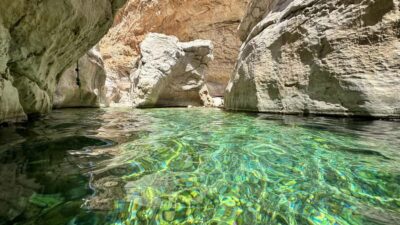
Wahiba Desert and Wadi Bani Khalid Guided Group Tour
Read our review →
Half-Day Sightseeing Essentials Tour and Audio Guide
Read our review →

Daymaniat Islands Snorkeling Tour with Refreshments
Read our review →

Daymaniyat Island: Snorkelling Tour with Tasty Lunch
Read our review →Browse the lists this tour appears in