
Reviewed · MUSCAT TOURS
Private Full-Day Muscat City Tour
Muscat’s appeal comes into focus when you move from the Grand Mosque’s enormous 21-ton carpet to the fish stalls of Mutrah, then on to forts, palaces, and an opera house. This private full-day tour connects those very different parts of the city in one well-planned route.
I like the private format, which lets your group see the main sights without waiting for a large coach. I also like the contrast between everyday Muscat, especially at the fish and vegetable market, and the polished Royal Opera House. The main drawback is the price: at $259 per person, this makes the most sense when you value private transport, a dedicated guide, and a full day of sightseeing.
Key points to know before booking
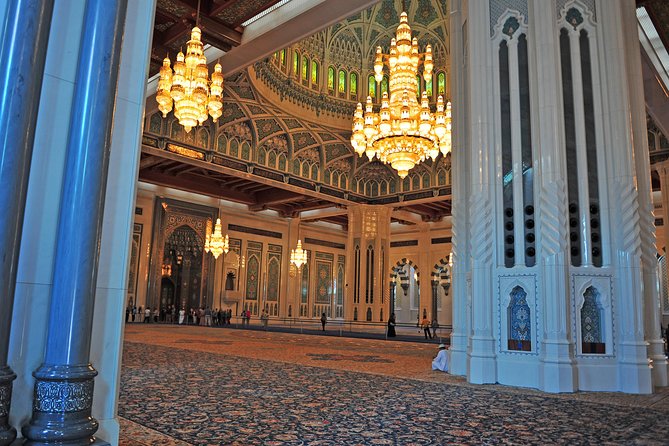
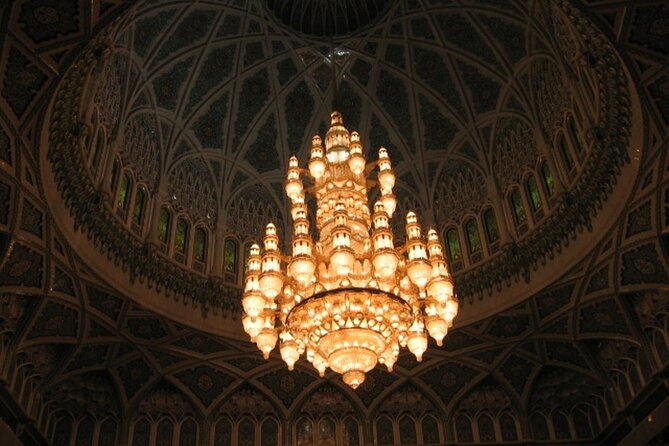
- A 21-ton prayer carpet anchors the Grand Mosque visit, along with a 14-meter Swarovski crystal chandelier.
- Mutrah shows you daily Omani life, from fresh seafood sales to the older lanes of the traditional souq.
- The private tour covers eight major sights in about 7 to 8 hours, with pickup offered.
- Mutrah Fort is visited inside, while Al Jalali and Al Mirani are photo stops only.
- The Royal Opera House adds a refined architectural stop to a day otherwise centered on markets, forts, and heritage.
- The route suits first-time visitors who want Muscat’s main landmarks handled in one outing.
Why this private Muscat route works
Muscat is spread across several districts, and its sights do not form one compact walking circuit. The Grand Mosque lies away from old Muscat, while Mutrah, the palace, forts, museum, and Opera House sit in different parts of the city. A private vehicle saves you from piecing those stops together yourself.
The day begins at 8:30 a.m. and lasts about seven to eight hours. That gives you enough time to see the major sights without turning every stop into a rushed photograph. You still need to keep an eye on the clock, since the route includes many stops, but the order is sensible.
The private setup is especially useful for couples, families, or a small group with shared interests. You can ask for more time at the mosque or souq, for example, though the listed schedule gives a good idea of the planned pace. Group discounts may improve the cost for larger parties.
The tour includes free admission at several stops and included admission at Mutrah Fort, Bait Al Zubair Museum, and the Royal Opera House. Pickup is offered, and a mobile ticket makes the booking easy to carry on your phone. Public transportation is nearby, but you will spend much less time coordinating connections by taking the arranged tour.
More City Tours in Muscat
- Muscat: Budget Friendly City Tour
★ 4.8 · 321 reviews - Half-Day Private Muscat City Tour – Top Landmarks in Just 4 Hours
★ 5.0 · 256 reviews - Oman: Private Muscat City Tour With Pick-up/ Drop-off
★ 4.4 · 234 reviews
The Grand Mosque and its remarkable interior
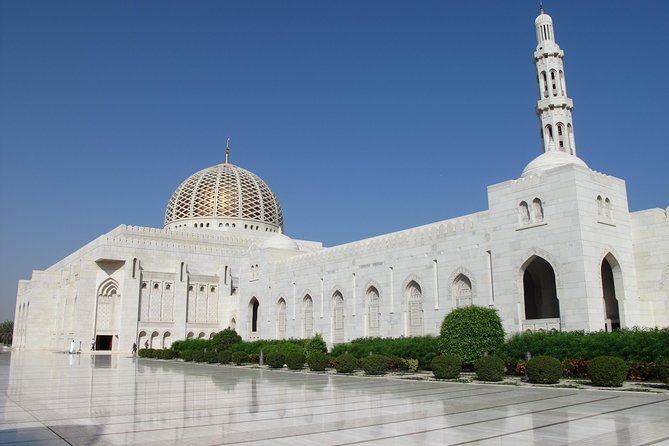
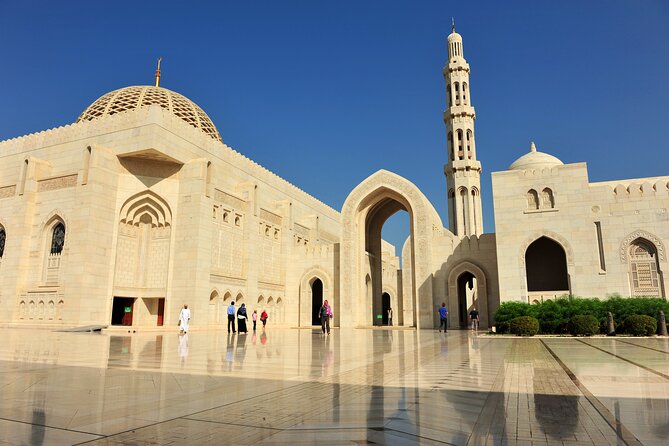
The Sultan Qaboos Grand Mosque is the day’s strongest opening stop. The complex occupies a huge site of about 416,000 square meters, with the mosque complex itself covering about 40,000 square meters. It was inaugurated on May 4, 2001.
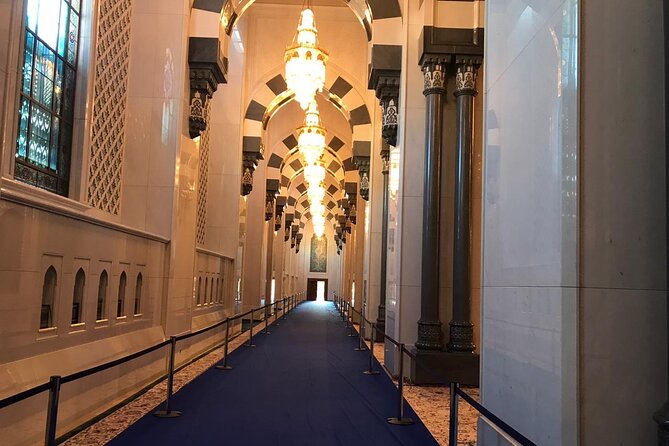
Five minarets surround the mosque, including a main minaret about 90 meters high. The principal prayer hall is square, measuring roughly 74.4 meters on each side, with a dome rising 50 meters above the floor. Those numbers help explain why the building feels so spacious even during a short visit.
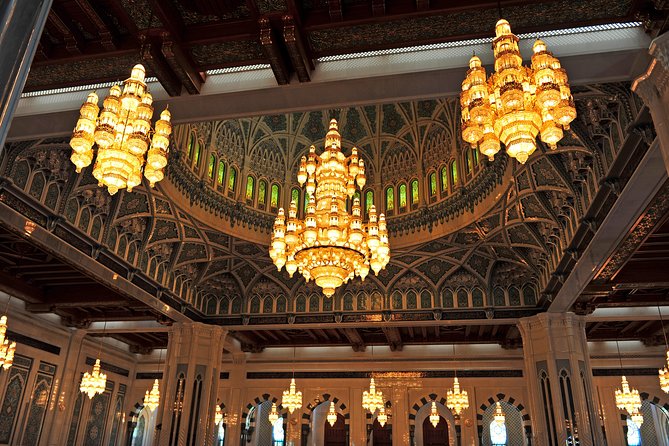
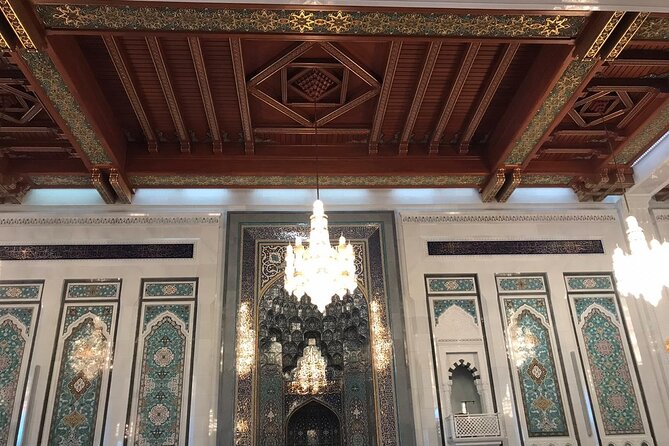
The interior details deserve your attention. The main prayer carpet weighs 21 tons and uses 28 colors. It was made as a single piece, and its size is part of the spectacle. Look up as well for the 14-meter Swarovski crystal chandelier, one of the mosque’s most memorable visual details.
The scheduled visit lasts about 45 minutes, with free admission. That is enough for a clear introduction, though not a slow architectural study. Since this is a religious site, your guide can help you understand the building’s purpose and design rather than leaving you to collect only photographs.
The mosque is the stop where clothing matters most, although the provided tour information does not spell out a dress code. You should confirm current entry requirements before going. The tour is not stroller accessible, so families with small children should plan accordingly.
Al Qurum and the road toward Mutrah
The drive from the mosque to Mutrah is part of the city introduction. You pass through areas associated with ministries and embassies, then travel along the beach road in Al Qurum.
This section is not a formal stop with a listed admission time, but it helps you see how Muscat changes from government district to coastal city. The route gives you a look at the city between major landmarks, rather than treating Muscat as a string of isolated attractions.
The beach road also breaks up the indoor and historical stops. You will not spend the whole morning inside museums or buildings, and the drive offers a chance to reset before the market visits.
Mutrah Fish Market: Muscat at work
The Mutrah Fish and Vegetable Market is one of the most useful stops on the route because it focuses on ordinary commerce. Local people buy and sell fresh fish, seafood, and vegetables here.
The visit lasts about 20 minutes and has no admission charge. That is not long, but it is enough to see the market in operation and notice a side of Muscat that grand monuments cannot show you.
I like this stop because it gives the day some balance. The Grand Mosque and royal buildings are carefully designed symbols. The market is practical, local, and tied to daily needs. You see people paying for food, sellers handling their goods, and a working part of the city rather than a preserved display.
The short timing may feel limited if you enjoy markets. Still, the stop works well as an introduction before the longer visit to Mutrah Souq.
more half-days around Muscat worth comparing
- From Muscat: Wadi Shab & Bimmah Sinkhole Full-Day Tour
★ 4.8 · 1,862 reviews - Wadi Shab and Bimmah Sinkhole Group Full Day Tour
★ 5.0 · 303 reviews - Full-Day Private Wahiba Sands Desert and Wadi Bani Khalid Tour
★ 5.0 · 291 reviews - Nizwa Fort-Nizwa Souq-Misfah Al Arbyeen-Jebel Shams – Private Full Day Tour
★ 5.0 · 220 reviews
Mutrah Souq and two centuries of trade
A short drive brings you to Mutrah Souq, Oman’s largest traditional souq. The market dates back about 200 years and sits beside Muscat’s harbor, a location tied to trade during the age of sail and routes toward India and China.
The lanes are narrow, and the covered sections can feel dim. The name Mutrah Souq is linked to this darkness, since sunlight does not reach every crowded lane during the day and lamps help shoppers find their way.
You have about one hour here, with free admission. That is a useful amount of time to walk through the market without letting the souq consume the whole afternoon. You can look closely at the architecture, browse the stalls, and get a sense of how the market still serves as a social and commercial center.
This is the place to slow down. I would not treat it as a quick shopping chore. Even if you do not plan to buy anything, the lanes and harbor setting help explain Muscat’s connection to maritime trade.
The practical challenge is that souqs are not arranged like a modern shopping center. It is easy to lose your sense of direction in the lanes. Staying aware of your meeting point matters, especially if you stop often or become absorbed in the stalls.
Mutrah Fort and the harbor defenses
From the souq, the tour goes to Mutrah Fort, set on a mountain ridge above the city and bay. Its position made sense for defense, allowing those who held it to watch both the sea and inland approaches.
The fort is said to have begun as an Omani structure in 1507. Portuguese additions later included two towers and a curtain wall. Under the Al Busaidi dynasty, the walls were doubled and more towers were added. The Ministry of Heritage and Culture restored the fort in 1980.
You get about 30 minutes here, and admission is included. That is enough for a focused visit, though the fort is not the place for a long, leisurely exploration. Its main reward is the setting and the defensive plan. From the ridge, you can understand why Mutrah’s harbor needed protection and how the fort related to the surrounding city.
I like the way this stop follows the souq. The market shows trade arriving by sea, while the fort shows the military concern that came with that trade. Together, they give Mutrah more meaning than either stop would on its own.
Bait Al Zubair and Omani culture
Bait Al Zubair Museum provides a compact introduction to Oman’s culture and history. The displays cover Omani civilization, local traditions, and information about the Royal Family.
The visit lasts about 30 minutes, with admission included. That makes it a concise museum stop rather than a full museum afternoon. If you want an organized overview of Omani identity before seeing the palace and forts, the timing is useful.
I see this as one of the day’s most practical stops. Markets and forts show pieces of Oman, but a museum can put those pieces into a wider context. You get a clearer sense of the objects, customs, and royal story connected to the buildings you see later.
Half an hour will not answer every question, so listen closely and use the stop to establish a basic framework. The tour works best when you approach the museum as an introduction, not as a substitute for a full study of Omani culture.
Al Alam Palace and the old Muscat setting
The route continues into old Muscat for a look at Al Alam Palace. The palace has more than 200 years of history and was built under Imam Sultan bin Ahmed, described as the seventh direct great-grandfather of Sultan Haitham.
The current building was rebuilt as a royal residence in 1972. Its gold and blue facade is distinctive, though the interior grounds are closed to the public. You can stop near the main gates and take photographs, and the palace remains in use for official functions and distinguished visitors.
The scheduled visit lasts about 15 minutes and is free. That is enough for photographs and a short explanation, but you should not expect an interior tour. The brief stop is still worthwhile because it places you in old Muscat and shows how the modern royal state uses historic surroundings.
I appreciate the restraint of this visit. You see the palace as an active official building, not as a staged attraction. The limitation is clear: if you want rooms, galleries, or a long palace visit, this stop will feel brief.
Al Jalali and Al Mirani forts from outside
Behind the palace, Al Jalali and Al Mirani forts guard the harbor of old Muscat. The Portuguese built them under Philip I of Portugal in 1580 on earlier Omani fortifications, after Ottoman forces had twice attacked Muscat.
The forts later fell to Omani forces in 1650. During civil wars between 1718 and 1747, Persian forces captured them twice after being invited to support rival imams. The fortifications were rebuilt and altered over time.
Here, you stop for about 10 minutes for photographs. Neither fort is open to visitors, so the value lies in the view, the harbor setting, and the story of how Muscat protected its entrance. Your guide can connect these forts with Mutrah Fort, giving you a broader picture of the defensive system.
Keep expectations realistic. This is not a fort tour. It is a short exterior stop that works well after the palace because the sights are close together.
The Royal Opera House and modern Omani design
The Royal Opera House gives the day a change of tone. Sultan Qaboos ordered its construction in 2001, and it officially opened on October 12, 2011. The building reflects contemporary Omani architecture and can accommodate up to 1,100 people.
The complex includes a concert theater, auditorium, formal gardens, a cultural market with shops, luxury restaurants, and an arts center for musical, theatrical, and operatic productions. You have about 30 minutes here, with admission included.
This is more than a quick photo stop, but the time is still limited. I would focus on the building’s design and the way it presents Oman as a modern country with a strong interest in classical music and the arts. The Opera House also rounds out the day visually. After markets, forts, and palace gates, you see a polished cultural venue built for performances and public life.
If architecture is your main interest, you may wish the visit were longer. Still, its place at the end of the route gives the tour a pleasing final note.
Is $259 per person a fair price?
At $259 per person, this is not a budget city tour. The value depends on how many people share the private vehicle and how much you value convenience.
You are paying for a full day, pickup, a private group arrangement, a guide, transportation between widely separated districts, and access to a broad set of sights. Several admissions are free, while Mutrah Fort, Bait Al Zubair Museum, and the Royal Opera House include admission. The price is easier to justify for a couple or small group that wants a dedicated day without arranging separate taxis.
For a solo visitor, the cost is harder to defend unless time is short or private touring is important. Group discounts may help larger parties. I would compare the cost with the price and effort of arranging transport to eight separate sights, keeping in mind that the private format also saves planning time.
The strongest value is breadth. You see religious architecture, food commerce, traditional shopping, military buildings, royal culture, and a modern arts center in one day. The weaker value is depth. Most stops are short, so this is designed as a first Muscat overview rather than a specialist tour.
Who should book this tour?
I would recommend it to first-time visitors with one free day in Muscat, cruise passengers with a full day ashore, couples, families, and small groups who want a private schedule. It also suits anyone who prefers a guide to explain the links between the city’s buildings rather than simply driving from one photo stop to another.
You should think twice if you prefer long museum visits, extended shopping time, or independent wandering. The schedule covers a lot of ground, and Al Alam Palace plus Al Jalali and Al Mirani are exterior visits only.
The tour is not stroller accessible. Most people can participate, but anyone needing a specific mobility arrangement should confirm details before booking. The start time is 8:30 a.m., and the full route lasts seven to eight hours, so plan for a substantial sightseeing day.
Free cancellation is available if you cancel at least 24 hours before the start time. Changes made inside that period are not accepted, and poor weather may lead to a new date or a full refund.
Should you book the Private Full-Day Muscat City Tour?
Book it if you want one organized day covering Muscat’s essential contrasts: mosque, market, souq, forts, palace, museum, and Opera House. The private format and well-spaced route are its strongest advantages, and the Grand Mosque, Mutrah market area, and harbor forts give the day real variety.
Skip it if $259 per person feels high for mostly introductory visits, or if you want to explore each site at length. For a first look at Muscat with pickup, a dedicated group, and a guide-led route, it offers a practical way to get oriented quickly.
FAQ
How long is the Private Full-Day Muscat City Tour?
The tour lasts approximately 7 to 8 hours.
What time does the tour start?
The listed start time is 8:30 a.m.
How much does the tour cost?
The stated price is $259 per person.
Is pickup offered?
Yes, pickup is offered.
Is this a private tour?
Yes. Only your group participates in the activity.
Which main sights are included?
The route includes the Sultan Qaboos Grand Mosque, Al Qurum Beach area, Mutrah Fish and Vegetable Market, Mutrah Souq, Mutrah Fort, Bait Al Zubair Museum, Al Alam Palace, Al Jalali Fort area, and the Royal Opera House.
Is admission included at every stop?
Admission is free at the Grand Mosque, Mutrah Fish Market, Mutrah Souq, Al Alam Palace, and the Al Jalali Fort photo stop. Admission is included at Mutrah Fort, Bait Al Zubair Museum, and the Royal Opera House.
Can I enter Al Jalali and Al Mirani forts?
No. These forts are not open to visitors on this tour. The stop is for photographs.
Is the tour accessible with a stroller?
No. The tour is not stroller accessible.
What is the cancellation policy?
You can cancel at least 24 hours before the start time for a full refund. Cancellations or changes made less than 24 hours before the start time are not accepted for a refund. If poor weather causes cancellation, you will be offered another date or a full refund.
Newest Muscat trips on the site
- From Muscat: Nizwa & Al Hamra with Jebel Shams Night Stay★ 4.8 · 3 reviews
- Watching Dolphins, Muscat★ 4.5 · 3 reviews
- Oman 3-Days 2-Night Shared Roundtrip Tour – Explore Oman’s Best★ 5.0 · 3 reviews
- Muscat trasfer: airport trasfer to/from hotel in muscat★ 5.0 · 3 reviews
- Guided Private Tour to Wakan Village in Oman★ 5.0 · 3 reviews
- Wadi Shab full day tour (Muscat tours):Oman Shore excursions★ 4.5 · 3 reviews
- Muscat: Full-Day City and Wadi Shab Tour★ 4.3 · 3 reviews
- Muscat by Night Sightseeing Tour★ 4.8 · 3 reviews
Muscat Tours, compared.
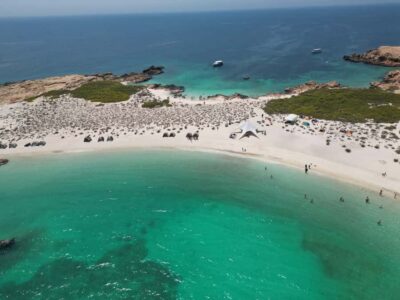
Daymaniat Islands Snorkeling Trip with Brunch
Read our review →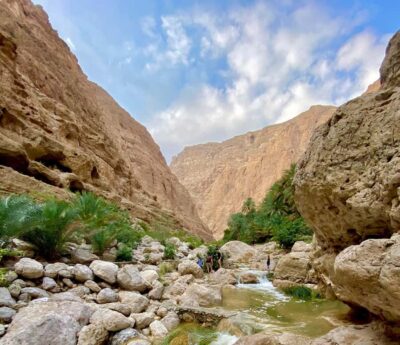

Wahiba Desert and Wadi Bani Khalid Guided Group Tour
Read our review →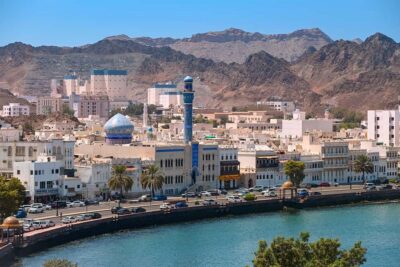
Half-Day Sightseeing Essentials Tour and Audio Guide
Read our review →

Daymaniat Islands Snorkeling Tour with Refreshments
Read our review →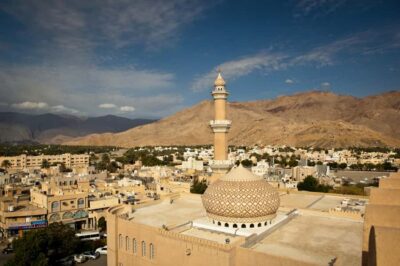

Daymaniyat Island: Snorkelling Tour with Tasty Lunch
Read our review →Browse the lists this tour appears in