
Reviewed · SALALAH TOURS
East Salalah Tour by VisitSalalah
Salalah’s east side packs a surprising amount into a short drive: old coastal villages, frankincense history, mountain springs, camels, sinkholes, and the broad green folds of Wadi Darbat. This tour gives you that mix without asking you to arrange a 4×4, find the sites, or negotiate the mountain roads yourself.
I like the private 4×4 transport, which suits Dhofar’s rough and inclined ground far better than a standard sedan. I also like the small group size, limited to seven people, and the chance to travel with a local Omani guide such as Mohammed, who has been praised for his polite manner and strong knowledge of the region.
The main point to check before paying is the timing. The tour is advertised as four hours, but the detailed schedule also describes an eight-hour guided outing. Ask VisitSalalah to confirm the actual start and finish times, especially if you have a flight, cruise departure, or another booking.
Key points at a glance
- Wadi Darbat changes with the season: Khareef can bring waterfalls and fuller pools, while the area remains a year-round stop for springs, caves, mountains, and camels.
- Taqa gives the tour historical depth: You can add Taqa Castle, Koofan Heritage House, and Burj Al Askar, with separate entrance fees paid on site.
- Sumharam connects scenery with trade history: The ruined city at Khor Rori formed part of the ancient frankincense route and is included in the UNESCO Land of Frankincense area.
- A private 4×4 matters here: You are better placed for rough ground and mountain roads than you would be in an ordinary rental car.
- The guide is central to the experience: Mohammed or Muhammed is named in the supplied feedback, and his explanations of Omani culture and Dhofar were highly praised.
- Budget for extras: The $160 price includes transport, guide services, water, and snacks, but not entrance fees or optional lunch.
Why Dhofar’s east side is worth your morning
Dhofar is not simply a beach destination. Its eastern side moves quickly from the coast to the mountains, with old settlements and frankincense sites in between. That change of scenery is the reason I would choose this outing over a simple viewpoint drive.
The route begins from Salalah with pickup at your hotel, the airport, or the seaport. You wait in the lobby about 10 minutes before the agreed time, and communication is expected through WhatsApp, phone, or email. That flexibility is useful if you are staying in different parts of town or arriving by ship.
The outing is conducted in English or Arabic. Since one Italian participant found the English difficult to follow, you should tell the company if clear, slower English is important to you. Another participant found Mohammed’s English excellent, so the experience may depend on the guide assigned and your own comfort with different accents.
Other trips out of Salalah that fill the same day:
- East Salalah Mountain Safari, Wadi Darbat, Beach, Camels, Dunes
★ 5.0 · 206 reviews - Salalah: Wadi Darbat, Jabal Samhan, Baobab, Mirbat Sand Dune
★ 4.6 · 178 reviews - Mountain Safari Private Tour
★ 5.0 · 105 reviews
Ain Razat, the water source at the foot of the hills
Ain Razat is described as the first major stop, a collection of natural springs that feed Salalah. Some springs run throughout the year, while others appear or strengthen during Khareef, the southwest monsoon season.
That seasonal shift helps explain Dhofar’s unusual appearance. The region can look dry outside the monsoon, then turn green when mountain water and rain return. Ain Razat is not just a pretty pause. It gives you a practical sense of why water matters so much to Salalah and why the area has long supported settlement and agriculture.
Allow room in your expectations. The supplied details do not promise a long walk, landscaped gardens, or a particular water level on the day. The springs are best understood as an introduction to the natural forces behind the eastern route, not as the whole attraction.
Taqa’s old village and the view from above
Taqa is a coastal town where the route shifts from natural scenery to local history. The old village and nearby viewpoints give you a chance to see a more traditional side of Dhofar before heading into the mountains.
The main optional stop is Taqa Castle, a 19th-century building that reflects the town’s earlier importance. You can pay OMR 3 to enter. The price is not included, and you can skip the interior if you would rather spend more time outside or keep the total cost down.
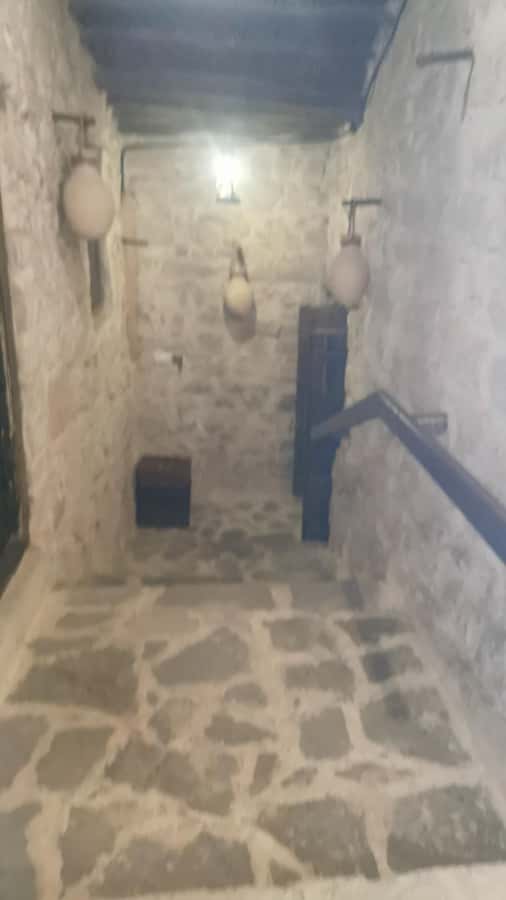
Koofan Heritage House offers another look at local life. It is described as a roughly 150-year-old Dhofari house, with an entrance fee of OMR 1. Burj Al Askar, a newer attraction at the top of the cliff, costs another OMR 1 and looks toward the castle and coast.
I like the way these choices work. You are not forced to buy every ticket, and the small fees let you decide how much history you want. If you want the fullest visit, budget OMR 5 for all three paid sites. If you mainly want the views and the guide’s explanation, you can keep those costs out.
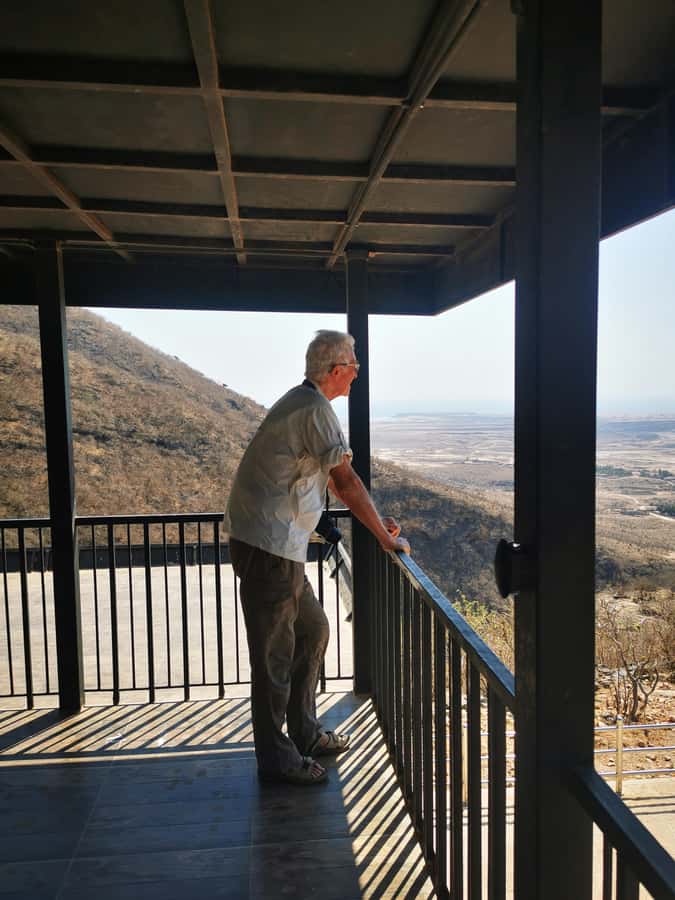
The Taqa balcony or viewpoint is especially useful for orientation. From above, the relationship between the settlement, coastline, and surrounding hills becomes clearer. Bring a hat and sunscreen, since exposed viewpoints can feel hot even when the air seems pleasant.
Wadi Darbat, camels and seasonal waterfalls
Wadi Darbat is the natural centerpiece of the trip. It lies in the mountains above Khor Rori, after the Taqa coast, and combines open views with water, caves, mountains, and vegetation.
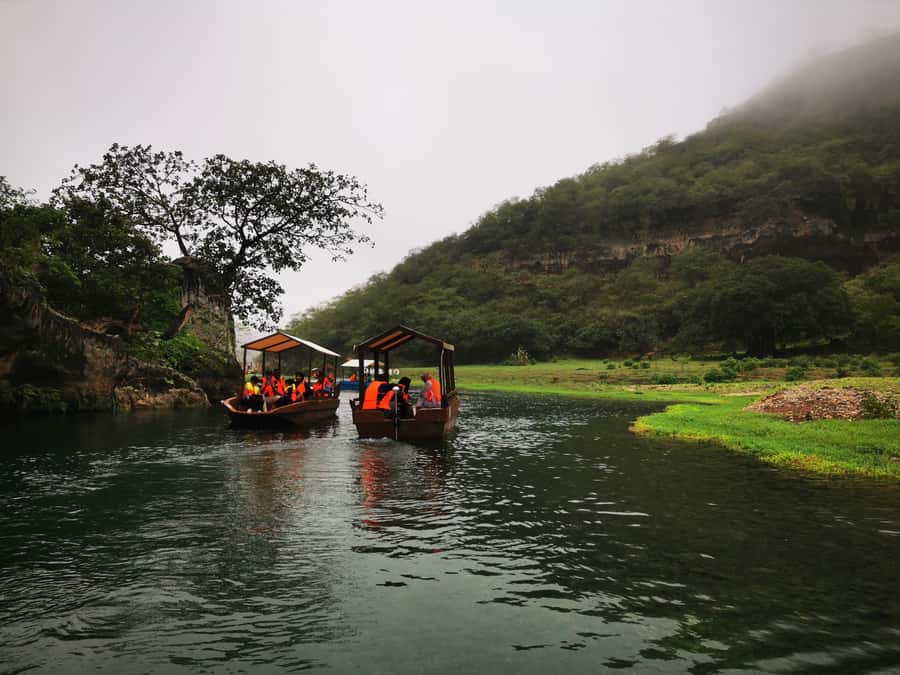
During Khareef, water from the hills can create waterfalls dropping from heights of about 30 meters, or 100 feet. The wadi may also hold fuller lakes and pools at that time. Outside the monsoon, the waterfalls may be less dramatic or absent, but the site still offers springs, mountain scenery, caves, picnic areas, and large numbers of camels.
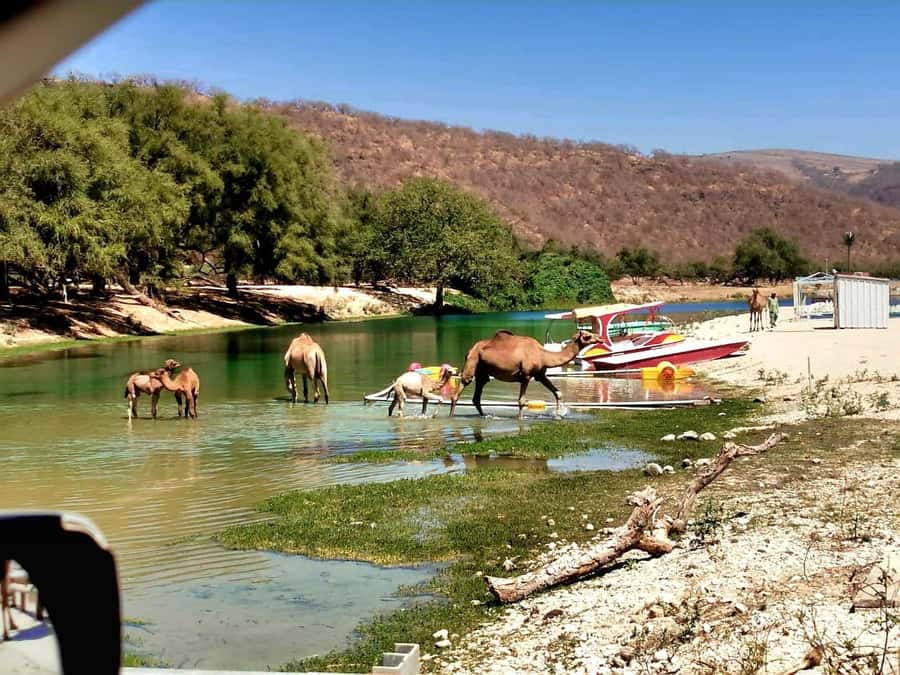
The camels are not a minor detail. One participant counted hundreds along the route, and that kind of sight is part of what makes Dhofar feel different from a standard city tour. You may see them beside the road or around the open spaces of the wadi, adding a distinctly local character to the drive.
You should expect some walking on rough, sloping ground. Comfortable clothes and sensible footwear matter more here than dressing for a formal sightseeing tour. The activity is not suited to wheelchair users, pregnant women, or people over 95, and non-folding and electric wheelchairs are not accepted.
Wadi Darbat also works well as a picnic setting, but lunch is not part of the base price. A local Omani lunch can be arranged for an additional OMR 5 per adult. That is a useful option if the confirmed schedule is closer to eight hours, though you should ask exactly what the meal includes and where it will be served.
A completely different sort of day from Salalah:
- Sunset Desert Safari Salalah Tour in Rub Al Khali – Empty Quarter
★ 5.0 · 91 reviews - Salalah: Sunset Desert Safari – Rub Al Khali – Empty Quarter
★ 4.6 · 79 reviews - West Salalah Tour – Caribbean of Orient – Fazayah Beach with City
★ 5.0 · 74 reviews - Salalah City Tour: Discover the Best of Oman’s Coastal Gem
★ 4.8 · 58 reviews
Sinkholes, baobab trees and the antigravity site
The route includes a sinkhole, baobab trees, and an antigravity site, giving the outing a few unusual stops beyond the main historical and nature attractions.
The supplied information does not give the names, walking distances, or exact sequence of these stops. That is worth knowing before you book. You can expect the guide to point them out along the route, but you should not assume each is a long, developed attraction with signs, facilities, or a formal visitor center.
The baobab trees are one of the more distinctive sights. Their thick trunks and unusual shapes make a welcome change from the palms and coastal vegetation around Salalah. The antigravity site adds a playful roadside moment, while the sinkhole provides another reminder of the region’s uneven mountain terrain.
Keep your camera ready, but also listen to the guide. These smaller stops are where a local explanation can add value, especially when the physical feature itself takes only a few minutes to see.
Sumharam and the ancient frankincense route
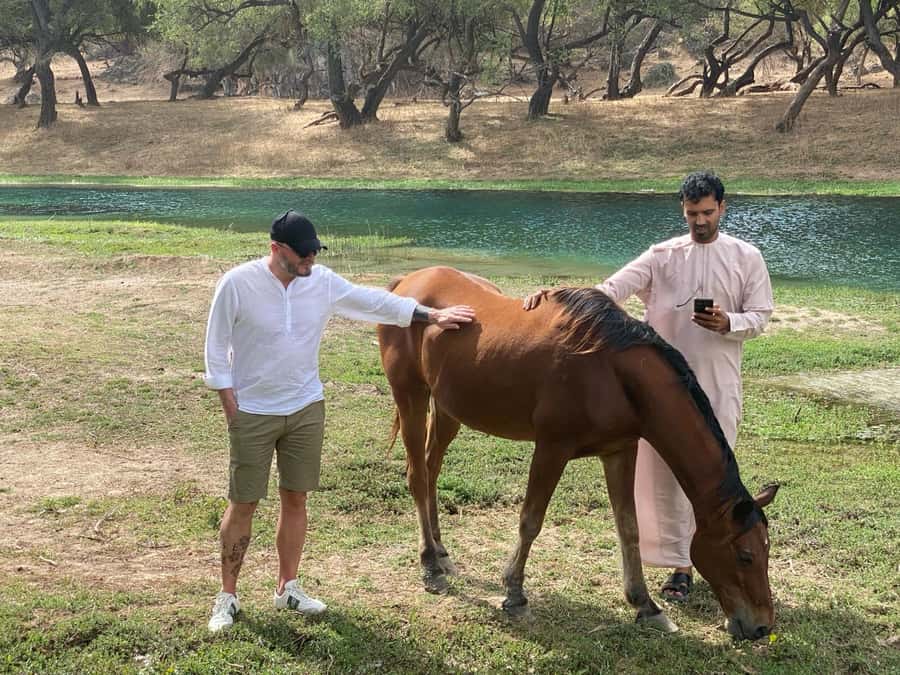
After Wadi Darbat, the route continues toward Khor Rori Creek and the ruins of Sumharam. This is the historical high point for anyone interested in Dhofar’s role in long-distance trade.
Sumharam was an ancient city connected with frankincense and copper commerce. The ruins are part of the UNESCO World Heritage Site known as the Land of Frankincense, which links several places associated with the region’s famous resin trade.
The Sumharam viewpoint lets you take in the setting before or alongside the archaeological stop. The creek and surrounding terrain help explain why an old settlement could function here. This is not only a pile of stones to photograph. The location makes more sense when you see its relationship to water, the coast, and routes leading inland.
The museum and archaeological park entrance is not included. The exact entrance price is not provided, so carry extra Omani rials and confirm the fee on the day. If you are short on time, ask the guide how long you have at the site and which sections matter most.
I would give Sumharam proper attention rather than rushing through it. The wadi supplies the visual drama, but Sumharam supplies the historical reason this part of Dhofar mattered far beyond Oman.
What the $160 price really covers
At $160 per person, this is not the cheapest way to see eastern Salalah. The value depends on how many people share the vehicle and how much independence you want.
The price covers a private 4×4, a licensed local Omani English-speaking guide, pickup and return, snacks, and water. For a solo visitor or a small party, that removes several practical problems: finding the correct mountain roads, choosing safe stopping points, and arranging transport from a hotel, airport, or seaport.
The small group cap of seven is also meaningful. You should have more room to hear the guide and ask questions than on a large coach. If more than seven people book, a minibus is arranged, so the intimate feel is not guaranteed for a larger party.
Entrance fees sit outside the price. If you enter Taqa Castle, Koofan Heritage House, Burj Al Askar, and the Sumharam facilities, your final cost will rise. Lunch is also extra at OMR 5 per adult if arranged in advance.
For a group that values convenience and a local guide, I see reasonable value in the $160 rate. For two people who are comfortable driving and visiting only the free sights, a self-drive plan might cost less, but it would not provide the same built-in explanation or pickup convenience.
Timing, transport and what to pack
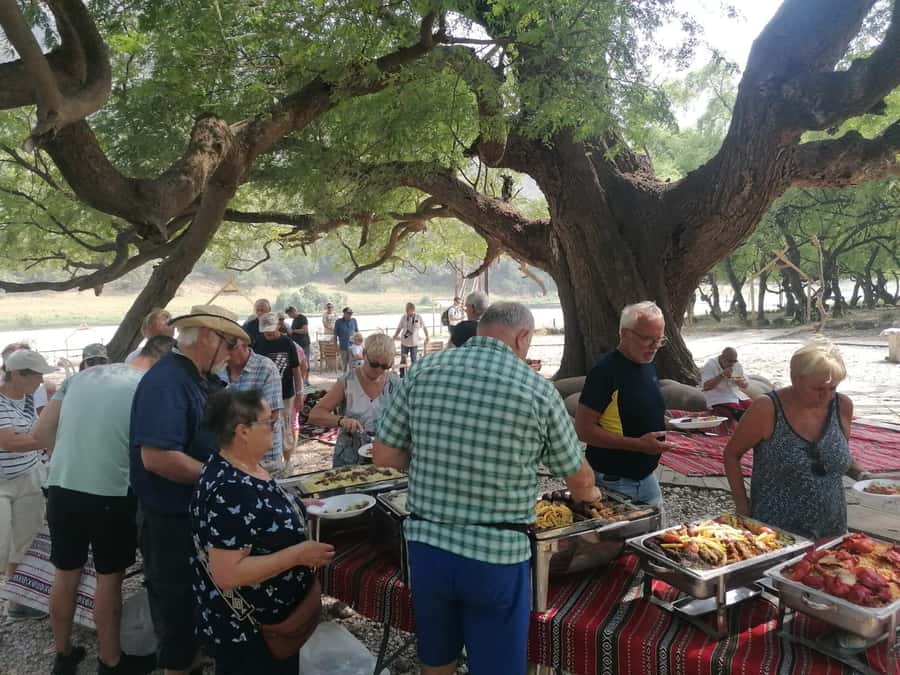
The duration needs clarification before booking. The activity details say four hours, while the itinerary describes Wadi Darbat as an eight-hour guided tour. The written route includes Ain Razat, Taqa, several optional heritage stops, Wadi Darbat, smaller natural features, and Sumharam, so four hours would feel very tight if all stops are included.
Ask three simple questions before you commit:
- What time does pickup begin?
- What time will you return to Salalah?
- Are all listed stops included within the confirmed schedule?
Those answers matter if you are using airport pickup, arriving from a cruise ship, or planning an evening flight.
Bring your passport or ID card, visa if required, hat, sunscreen, comfortable clothing, and water-friendly patience for a day outdoors. Snacks and water are supplied, but large bags and luggage are not allowed. Jewelry, alcohol, drugs, fires, military-style clothing, and loud behavior are also prohibited.
The 4×4 is the right vehicle for this route, but it does not remove the need for care. Ground at the natural stops can be rough and inclined. Wear shoes that give you secure footing, even though the supplied information does not specify a particular shoe type.
Who will enjoy this tour most
I would recommend this outing to you if you want a broad introduction to eastern Dhofar in one organized trip. It suits first-time visitors who want nature, history, and local context without renting a vehicle.
It is also a good match for couples, families with older children, and small groups who prefer a flexible private vehicle. The guide can connect Taqa’s old buildings, the frankincense trade, and the mountain water system in a way that separate taxi rides cannot.
You should think twice if you need guaranteed accessibility, dislike uneven ground, or have a strict schedule. The route is not suitable for wheelchair users, pregnant women, or people over 95, and the unclear four-hour versus eight-hour timing is a real planning concern.
The outing may be less satisfying if you want long, independent visits inside every museum and monument. The route covers many places, so some stops may be brief. Confirm the schedule if you would rather study one site slowly than collect a series of viewpoints.
Should you book the East Salalah Tour?
Book it if you want Dhofar’s variety in one day, especially Wadi Darbat’s seasonal water, Taqa’s old buildings, camel sightings, and Sumharam’s frankincense connection. The strongest part is the combination of private 4×4 transport and a local Omani guide, with Mohammed or Muhammed receiving especially warm praise for courtesy and cultural explanations.
Before booking, get the duration in writing and set aside money for entrance fees. If the timing is confirmed and the group remains small, this is a practical way to see the east side of Salalah without taking on the driving yourself.
FAQ
How long does the East Salalah Tour last?
The activity information states four hours, but the detailed schedule also describes an eight-hour guided outing. Confirm the actual duration and return time with VisitSalalah before booking.
Is hotel pickup included?
Yes. Pickup and return are included from hotels in Salalah, and pickup can also be arranged from the airport or seaport. You should wait in the hotel lobby about 10 minutes before the scheduled time.
What languages does the guide speak?
The tour is available with a live guide in English or Arabic. A licensed local Omani English-speaking guide is provided.
Are entrance fees included?
No. Taqa Castle, Koofan Heritage House, Burj Al Askar, and museum or landmark entrances are paid separately. The listed optional fees are OMR 3 for Taqa Castle, OMR 1 for Koofan House, and OMR 1 for Burj Al Askar.
Can I add an Omani lunch?
Yes. A local Omani lunch can be arranged for an additional OMR 5 per adult. Lunch is not included in the tour price.
Is the tour suitable for wheelchair users?
No. The route includes walking on rough and inclined ground, and the activity is not suitable for wheelchair users. Non-folding and electric wheelchairs are not accepted.
Newest Salalah trips on the site
- Salalah: Wadi Darbat, ,Teeq Cave – Baobou Trees Tour★ 4.3 · 3 reviews
- Salalah East Adventure: Waterfalls, Mountain & Safari★ 5.0 · 3 reviews
- Salalah: Horse Riding by the Beach★ 4.4 · 3 reviews
- Elite Private Full Day Tour – Salalah Main Attractions★ 5.0 · 3 reviews
- Salalah City Tour :Salalah Tours★ 5.0 · 3 reviews
- East Salalah Adventure: Nature, History, and Scenic Views★ 5.0 · 3 reviews
- West Coast Mountains and Beaches (Fazayah beach + Shaat cliff)★ 5.0 · 3 reviews
- Half day Salalah City Tour with Souq Visit★ 5.0 · 3 reviews
Salalah Tours, compared.
East Salalah Mountain Safari, Wadi Darbat, Beach, Camels, Dunes
Read our review →
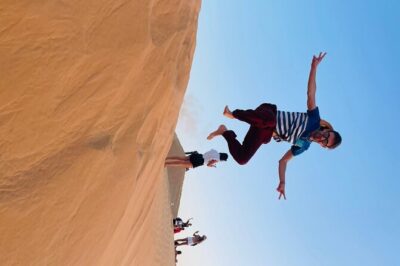
Sunset Desert Safari Salalah Tour in Rub Al Khali – Empty Quarter
Read our review →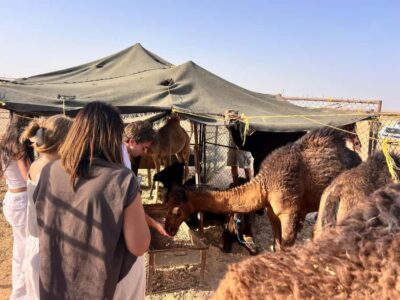
Sunset Desert Safari – Rub Al Khali – Empty Quarter
Read our review →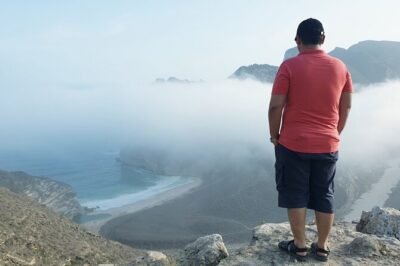
West Salalah Tour – Caribbean of Orient – Fazayah Beach with City
Read our review →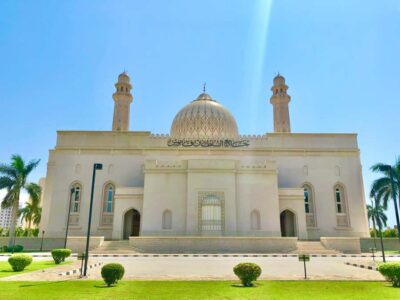
Salalah City Tour: Discover the Best of Oman’s Coastal Gem
Read our review →
Sunset desert safari tour in Salalah(private tour)
Read our review →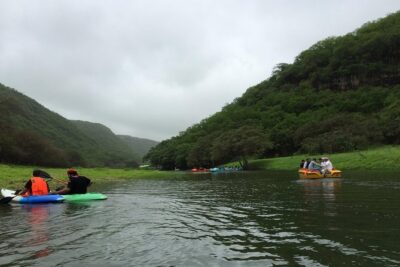
East & West Salalah Combination Tour – Darbat Waterfall, Mughsail
Read our review →Browse the lists this tour appears in