
Reviewed · SALALAH TOURS
East Salalah Highlights: Half-Day Heritage & Scenic Countryside
Salalah’s east side packs an unusual amount into half a day: a former governor’s home, a coastal cliff, a lake-filled valley, giant baobab trees, a gravity-defying road, and an ancient frankincense port. The most memorable stop may be Sumhuram Old City, where broken walls and sea views connect Dhofar’s past to its famous trade in frankincense.
I like the mix of culture and nature. Taqah Castle gives the day a human story, while Wadi Darbat brings open countryside, seasonal waterfalls, animals, and possible boat rides. I also like that this is a private outing, so your group is not tied to strangers or a fixed bus schedule.
The main caution is the price: $170 per person is a serious spend for four to five hours. Taqah Castle is currently under maintenance, too, so the tour may give you extra time at the nearby cliff rather than the full castle visit described below.
Key points to know before booking
- Sumhuram gives the tour its strongest historical stop: This UNESCO World Heritage site preserves the remains of an ancient port linked to Dhofar’s frankincense trade.
- Wadi Darbat changes with the season: You may see a lake, small waterfalls, pedal boats, speedboats, and local herds, especially after the monsoon.
- The Taqah Castle visit may be limited: The site is under maintenance, with added time offered at Taqah Cliff instead.
- Tawi Attair is a serious natural drop: The limestone sinkhole reaches about 211 meters, with birds nesting in its walls.
- The baobab stop is rare in Oman: Dhofar has about 200 of these large trees, locally known as Ankiji or Al Mashwa.
- Private transport keeps the half-day manageable: Vehicles are air-conditioned, with a 2WD for one to three adults and 4WD arrangements for larger groups.
Why this east Salalah route works so well
This is not just a run of viewpoints. The route shows you several sides of Dhofar in a compact outing. You start in the old fishing town of Taqah, move through the coast and mountains, then finish at a port city that once helped move frankincense across the ancient world.
That sequence matters. You get local life first, then scenery, then archaeology. I find that more satisfying than a tour made entirely of photo stops, because the ruins at the end have a clearer place in the story of the region.
The tour lasts about four to five hours, including driving between stops. Hotel pickup is available, and the price includes an air-conditioned vehicle, bottled water, fuel surcharge, entrance fees, and an Arabic and English-speaking guide. The outing is private, so only your own group takes part.
The vehicle setup depends on group size. One to three adults use a 2WD, four to six adults use a 4WD, and seven to nine adults are split between two 4WD vehicles with one guide and two drivers. That arrangement is useful on the mountain roads, though larger groups should expect to divide between vehicles for part of the day.
more forts and old quarters near Salalah
- Salalah City Tour with History, Culture, Souq Shopping, Halwa
★ 4.5 · 39 reviews - Historical Salalah City Tour
★ 4.7 · 22 reviews - Historical Salalah City Tour with Culture, Food & Shopping
★ 4.6 · 20 reviews
Taqah Castle and the old fishing town
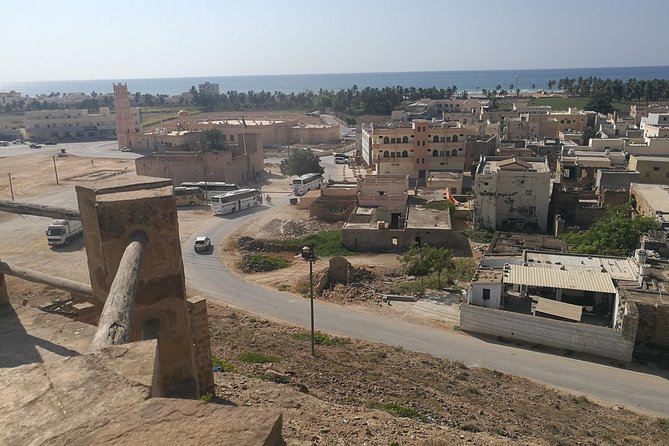
The first stop is Taqah, a coastal town known for fishing, dried sardines, rural harvests, and traditional Dhofari mud houses. Even the drive through town helps set the scene. This is not a polished resort district. It has a more local feel, with older buildings and a connection to the sea.
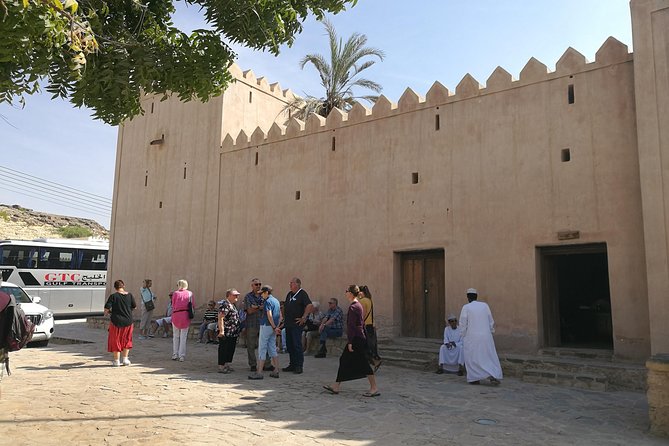
Taqah Castle was once the home of the local Wali, or governor. It now functions as a museum, with displays about earlier Omani life. A visit here can help you understand how authority, household life, and local customs once worked in Dhofar.
The planned stop lasts about 45 minutes and includes admission. There is also an old fort or watchtower on a nearby hill, visible alongside the castle.
You should check the condition of the site before setting your expectations. Taqah Castle is currently under maintenance. The practical result is that your guide may offer extra time at Taqah Cliff instead of a full museum visit. If historic interiors are the main reason you booked, this is the biggest limitation of the experience.
Still, the town itself remains worthwhile. I would treat the castle as a bonus rather than the sole reason to choose this tour.
Taqah Cliff, ocean air, and a chance of dolphins
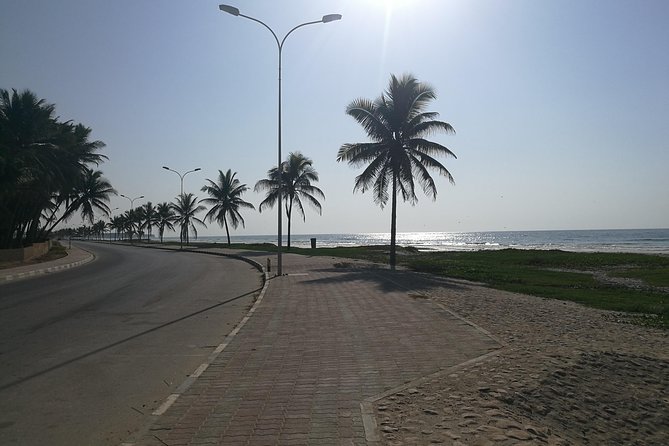
The next stop reaches a rocky cliff at the end of Taqah’s coastline. The cliff rises about 15 meters and looks over the Indian Ocean and Taqah city. You have around 20 minutes here, enough for photos and a short pause in the sea breeze.
This is one of the simple pleasures of the route. After the enclosed setting of a castle or the drive through town, the open view gives you room to breathe. The cliff also adds a strong coastal contrast to the mountain stops later in the day.
Dolphins may be visible below the cliff. The wording matters: there is a high chance of spotting them, but no wildlife sighting is guaranteed. Bring patience and do not make a dolphin encounter the deciding factor when you book.
If Taqah Castle remains closed or partly restricted, this is likely to become a longer stop. That can work well for people who prefer scenery, but less so for anyone hoping to spend time with museum displays.
Wadi Darbat’s lake, waterfalls, and local herds
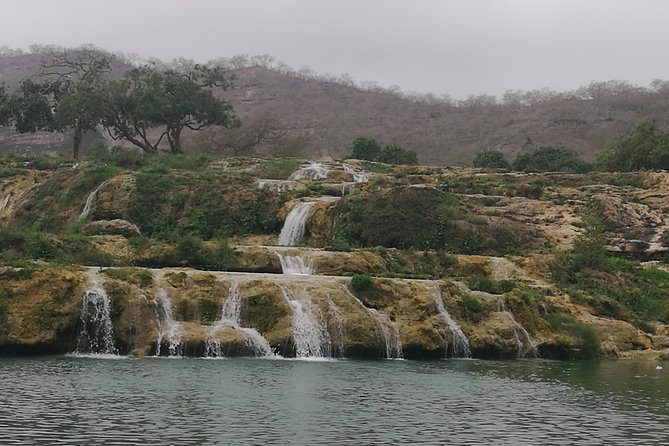
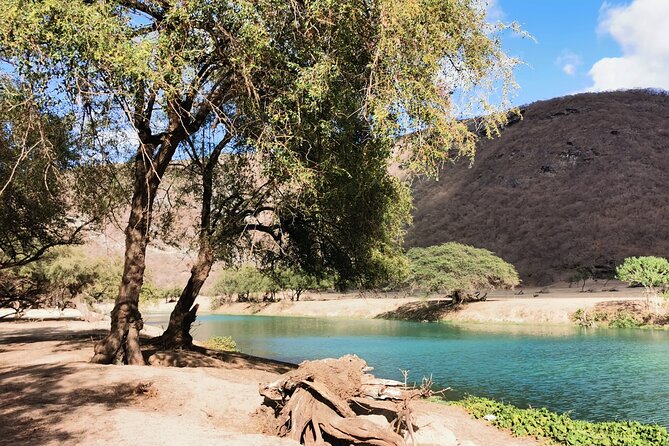
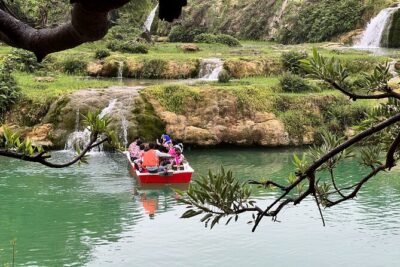
Wadi Darbat is the longest nature stop, with about an hour set aside. This valley is known for its spring, which feeds a natural lake. Depending on the season, you might also find small waterfalls and water activities such as pedal kayaking, speedboats, and kayak boats.
The season makes a real difference here. After the monsoon, the valley is more likely to show flowing water and greener conditions, while other periods may feel drier and quieter. The supplied details do not promise a specific water level, so think of the lake and falls as seasonal features rather than fixed attractions.
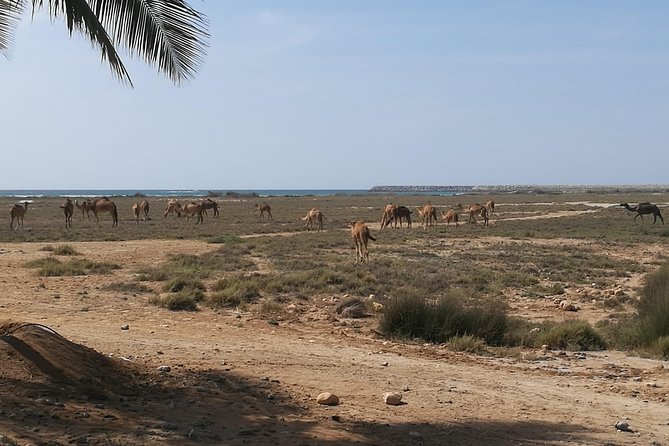
You may also see camels, cattle, and goats around the valley. These herds add something that a viewpoint cannot: a glimpse of how the countryside is used beyond sightseeing. I like this part of the route because it is less formal. You are not simply looking at a monument. You are watching the setting function as a valley, pasture, and recreation area.
The drawback is that Wadi Darbat can be the least predictable stop. Water activities may be seasonal, and the appearance of the valley can change with weather. If you want a guaranteed waterfall, this tour cannot promise one.
The hour here is generous by half-day standards. You can take in the water, watch for animals, and enjoy the surroundings without being rushed through in ten minutes.
more half-days around Salalah worth comparing
- Salalah: Half-Day Guided Tour to Wadi Darbat & Mount Samhan
★ 4.9 · 46 reviews - Explore Samhan Mountain – Half-Day Getaway with Lunch Included.
★ 5.0 · 10 reviews - Half-Day Private Salalah East Tour
★ 5.0 · 3 reviews - Muscat: Half-Day Sightseeing Essentials Tour and Audio Guide
★ 4.2 · 598 reviews
Tawi Attair and the Well of Birds
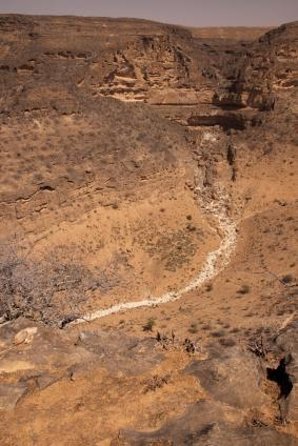
About 20 minutes beyond Wadi Darbat, the road climbs through open countryside to Tawi Attair. Locals call its limestone sinkhole the Well of Birds. It reaches around 211 meters deep, roughly the height of a 60-floor building.
This is a stop for scale. From the viewing area, the opening may look deceptively simple until you consider the depth below. Birds nest in the walls, and their calls can echo around the limestone opening. The tour allows about 25 minutes, which should give you time to look carefully and take photographs.
The site is also a good reminder that Dhofar’s appeal is not limited to beaches and waterfalls. Its geology is part of the story. The sinkhole is a karst formation, created in limestone, and its size gives the mountain section a sense of drama.
Use sensible care around the viewpoint. The information provided does not describe railings, paths, or accessibility details, so follow your guide’s instructions and do not treat the edge as a casual photo platform. Most people can participate in the tour, but this is still a natural formation rather than a purpose-built attraction.
Samhan’s rare baobab trees
The baobab stop comes in Wadi Hinnah on Samhan Mountain. These trees are known locally as Ankiji or Al Mashwa and are unusual in Oman. About 200 baobab trees are found in Dhofar, with some reaching 25 meters in height and about two meters in trunk diameter.
You get around 15 minutes here. That is enough for photos and a close look, but not a long forest walk. The trees themselves are the point. Their swollen trunks and strange branching forms look unlike the usual image of an Arabian mountain.
The supplied information gives the scientific name as dansonia digitata. The trees are associated mainly with Africa, especially Madagascar, which makes this a particularly distinctive Dhofar stop.
I would keep your expectations focused. This is a short roadside-style nature visit, not a full botanical excursion. Its value comes from seeing a rare local habitat as part of a larger route. If unusual plants interest you, it may be one of the day’s highlights. If you prefer long walks, fifteen minutes may feel brief.
Samhan’s famous gravity point
Around 15 minutes farther down the Samhan mountain road is the so-called gravity point. Here, you put the vehicle in neutral and watch it appear to roll uphill.
The experience is presented as a natural mystery, but the description also calls it controversial. That is the right way to approach it. Enjoy the visual trick, test it for yourself, and let your guide explain the local claim. You do not need to decide that the road truly defeats gravity to have fun with the stop.
Only about 15 minutes are allocated, so this is a quick experiment rather than a major attraction. It works best as a light, curious break between the baobabs and Sumhuram.
Some people will find it fascinating. Others may see it as a road illusion and move on quickly. I would not book the tour for this point alone, but it adds variety and gives your group something amusing to test together.
Sumhuram Old City and Dhofar’s frankincense trade
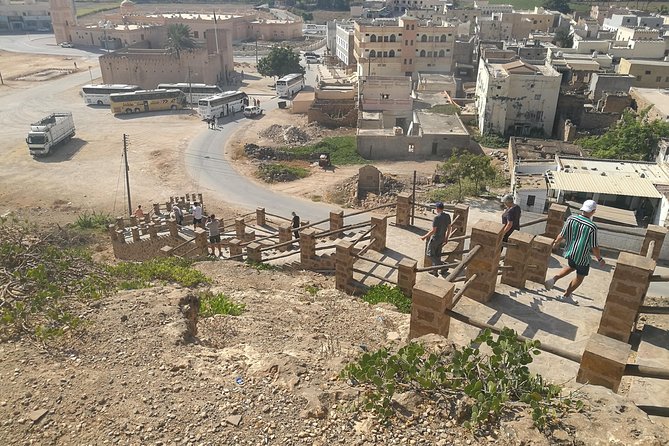
The final stop is Sumhuram Old City, a UNESCO World Heritage site on a small hill overlooking the Indian Ocean. The remains belong to an ancient settlement dating to the fifth century BC, and the site was later important to Dhofar’s frankincense trade.
This is the most substantial historical stop of the day. The preserved remains are not a fully rebuilt city, so you need to use the setting and your guide’s explanation to picture how the settlement worked. The sea view is not just decorative. It helps explain why this hill mattered to a port community.
The information center shows a six-minute video about the ruins and provides historical context. Admission is included, and about an hour is planned for the visit. That is a sensible amount of time for the ruins, video, views, and photographs.
I like ending here because the earlier stops begin to connect. Taqah shows the region’s more recent local life. Wadi Darbat and Samhan show its natural setting. Sumhuram explains how Dhofar fit into long-distance trade.
Do not expect the scale of a huge archaeological park. Sumhuram is valuable for its story, position, and connection to frankincense, not because every wall remains intact. A guide makes a real difference here, especially if you want more than a quick look at stones on a hill.
What the $170 price really buys you
At $170 per person, this is not a budget sightseeing ride. The price makes more sense if you value a private vehicle, hotel pickup, a guide, included entrance fees, bottled water, and a route that reaches several places difficult to combine on your own.
The private format is the strongest part of the value. You travel only with your own group, and the vehicle plan is adjusted for group size. That gives you a more personal setting than a large coach and avoids paying separate entrance fees at Taqah Castle and Sumhuram.
The short duration also matters. You get a full east Salalah circuit in four to five hours, which can fit neatly into a busy Oman itinerary. It is useful if you have limited time in Salalah or want to leave the rest of the day open.
The value is weaker for solo visitors focused mainly on one attraction. At that price, a person who wants only a beach view or only a museum may find the outing expensive. It makes more sense for a small group that wants cultural sites, mountain scenery, and nature in one private half-day.
Group discounts are offered, though no discount amount is specified. Ask about the final group price before booking.
Guide style and practical details
The guide speaks Arabic and English. One review specifically names Hamid and describes a tour that connected Oman’s different historical periods, Taqah’s museum, original buildings at the festival area, and mountain waterfalls. Hamid may not be assigned to every departure, so treat his name as useful context, not a guarantee.
The guide’s role matters most at Taqah Castle and Sumhuram. At the natural stops, your guide can point out the main features and help with timing. At the historic sites, the explanation gives the ruins a reason to matter.
Hotel pickup is available, and the vehicle is air-conditioned. Bottled water, fuel surcharge, all taxes, and listed entrance fees are included. Anything not specifically listed is extra, so do not assume meals or additional activities are covered.
The experience requires good weather. You can cancel for a full refund up to 24 hours before the start time. If poor weather forces the operator to cancel, you are offered another date or a full refund.
Who should book this Salalah tour
I would recommend it to you if you want a well-packed private half-day and enjoy changing subjects often. You get a museum, coast, valley, sinkhole, rare trees, a roadside curiosity, and archaeology without committing to a full-day expedition.
Families may appreciate the variety. Wadi Darbat has a natural setting and possible water activities, while the gravity point gives younger visitors something hands-on to test. The tour also suits couples and small groups who want an air-conditioned ride between stops instead of arranging several separate drives.
History-minded visitors should especially value the two heritage sites, though you should confirm Taqah Castle’s maintenance status. Nature lovers will like the combination of coast, valley, limestone, and baobabs, but should remember that waterfalls and water activities depend on the season.
I would hesitate if your priority is a slow, detailed archaeological visit. Seven stops in four to five hours means the schedule moves along. I would also hesitate if you dislike short photo stops or are paying alone and want the lowest possible cost.
Should you book East Salalah Highlights?
Book it if you want the broadest east Salalah sampler in a private format. Sumhuram, Tawi Attair, the baobabs, and Wadi Darbat give the outing real variety, and the included transport and fees remove much of the day’s planning work.
Before paying $170 per person, confirm whether Taqah Castle is open and how much time will be shifted to Taqah Cliff. If the castle remains under maintenance, book for the coast, mountains, unusual trees, and Sumhuram rather than for a complete museum visit.
For a small group with limited time, this is a practical and engaging choice. For a solo visitor or anyone wanting deep time at each site, the price and quick pace may not be the best match.
FAQ
How long does the East Salalah Highlights tour last?
The tour lasts approximately four to five hours, including the scheduled visits and driving between stops.
Is hotel pickup available?
Yes. Hotel pickup is offered for this private Salalah experience.
Is Taqah Castle open during the tour?
Taqah Castle is currently under maintenance. You may be offered extra time at the nearby Taqah Cliff viewpoint instead.
Does the tour include Sumhuram Old City admission?
Yes. Admission to Sumhuram Old City is included.
Are dolphins guaranteed at Taqah Cliff?
No. Dolphins have a good chance of being seen below the cliff, but wildlife sightings are not guaranteed.
What vehicle is used for different group sizes?
One to three adults use a 2WD vehicle. Four to six adults use a 4WD, while seven to nine adults use two 4WD vehicles with one guide and two drivers.
What happens if bad weather cancels the tour?
If poor weather causes the operator to cancel, you can choose a different date or receive a full refund.
Newest Salalah trips on the site
- Salalah: Wadi Darbat, ,Teeq Cave – Baobou Trees Tour★ 4.3 · 3 reviews
- Salalah East Adventure: Waterfalls, Mountain & Safari★ 5.0 · 3 reviews
- Salalah: Horse Riding by the Beach★ 4.4 · 3 reviews
- Elite Private Full Day Tour – Salalah Main Attractions★ 5.0 · 3 reviews
- Salalah City Tour :Salalah Tours★ 5.0 · 3 reviews
- East Salalah Adventure: Nature, History, and Scenic Views★ 5.0 · 3 reviews
- West Coast Mountains and Beaches (Fazayah beach + Shaat cliff)★ 5.0 · 3 reviews
- Half day Salalah City Tour with Souq Visit★ 5.0 · 3 reviews
Salalah Tours, compared.
East Salalah Mountain Safari, Wadi Darbat, Beach, Camels, Dunes
Read our review →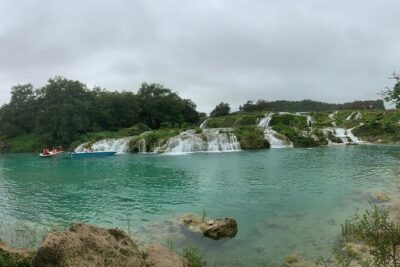
Sunset Desert Safari Salalah Tour in Rub Al Khali – Empty Quarter
Read our review →
Sunset Desert Safari – Rub Al Khali – Empty Quarter
Read our review →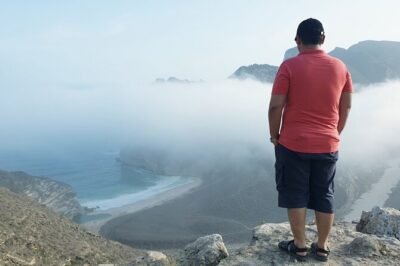
West Salalah Tour – Caribbean of Orient – Fazayah Beach with City
Read our review →
Salalah City Tour: Discover the Best of Oman’s Coastal Gem
Read our review →
Sunset desert safari tour in Salalah(private tour)
Read our review →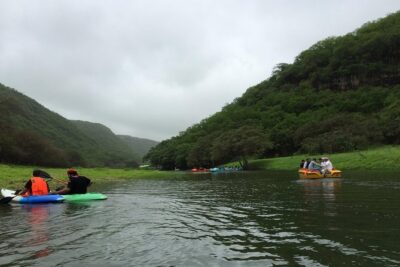
East & West Salalah Combination Tour – Darbat Waterfall, Mughsail
Read our review →Browse the lists this tour appears in